
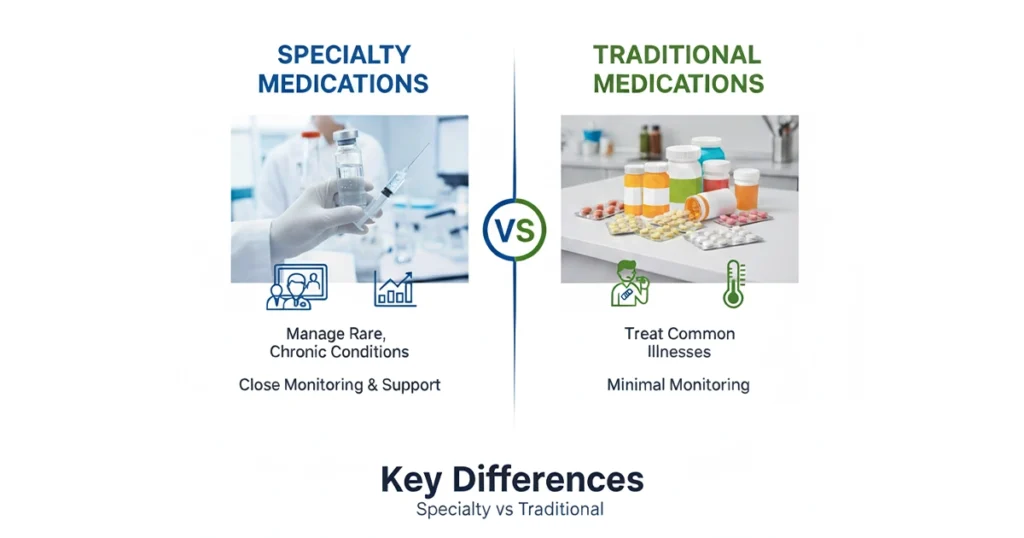
As more patients are diagnosed with chronic and rare illnesses, distinguishing between specialized pharmaceuticals and standard treatments has become increasingly important. Specialty Medications Vs Traditional Medications is a comparison gaining relevance because specialty drugs are transforming how complex diseases are treated. These advanced therapies require specialized handling, clinical monitoring, and controlled delivery, unlike regular prescriptions picked up from a traditional pharmacy.
Specialty medicines are designed for complex disorders such as autoimmune diseases, cancer, HIV/AIDS, and chronic inflammatory conditions. These medications may be injectable, biologic, or require strict storage conditions. Specialty pharmacies like SwyftScripts support patients by ensuring proper medication handling, delivery, and ongoing care coordination. Understanding their role is crucial for patients, caregivers, and healthcare providers.
What Are Specialty Medications?
Specialty drugs are high-cost prescription medications used to treat rare, severe, or chronic conditions. They often require advanced manufacturing, such as biologic drug production, along with FDA-mandated monitoring and close coordination through specialty pharmacy services. A specialty pharmacy helps manage these complex therapies by ensuring proper storage, safe dispensing, and continuous patient support throughout the treatment journey.
As of mid-2024, more than 20 new therapies had already been approved by the FDA, and nearly 75% of the approximately 7,000 medicines currently in development are classified as specialty drugs. This rapid growth reflects rising demand for advanced treatment options, particularly among patients with difficult-to-manage or rare diseases.
Common characteristics:
- Require special handling or refrigeration
- May be injectable medications or self-administered injections
- Need ongoing clinical monitoring and patient support programs
- Treat complex chronic conditions, including CIDs and rare diseases treatment
- Often available through a specialty pharmacy
What Are Traditional Medications?
Traditional medications are standard prescription or non-prescription drugs used for common, less-complicated conditions. These include tablets, capsules, or creams dispensed at typical retail pharmacies. Most do not require special handling, high-touch monitoring, or special training for administration.
Common characteristics:
- Used for common illnesses like flu, high blood pressure, or infections
- Available in oral form and easy to self-administer
- Broad pharmacy availability
- Lower cost than specialty pharmaceuticals
- Limited need for clinical monitoring
Specialty Medications Vs Traditional Medications
| Category | Traditional Medication | Specialty Medications |
| Conditions | Common | Complex / Rare |
| Cost | Low | High-cost medications |
| Handling | Standard | Special handling and storage |
| Monitoring | Minimal | Clinical monitoring requirements |
| Access | Retail pharmacies | Specialty pharmacy |
| Administration | Oral mainly | Injectable / complex |
Specialty medications vary from traditional drugs across several important aspects, including:
- Disease focus
- Cost and complexity
- Storage requirements
- Distribution channels
- Monitoring and administration methods
These distinctions highlight why specialty treatments require enhanced oversight, personalized management, and specialty pharmacy support compared to everyday prescriptions.
Disease Focus
Specialty drugs primarily treat complex chronic conditions such as rheumatoid arthritis, Crohn’s disease, HIV/AIDS, hepatitis C, and rare diseases. These conditions often require specialized care plans, biologic drugs, and long-term management. In contrast, traditional medications address common illnesses like infections, hypertension, asthma, or seasonal allergies. Because specialty medicines target rare and challenging diseases, treatment often involves more personalized oversight.
Conditions Treated with Specialty Medications:
- Rheumatoid arthritis
- Crohn’s disease
- HIV/AIDS
- Hepatitis C
- Rare diseases
Conditions Treated with Traditional Medications:
- Common infections
- Hypertension
- Asthma
- Seasonal allergies
Cost and Complexity
Specialty medications are typically high-cost prescription drugs because of advanced biologics manufacturing, limited production, and strict FDA monitoring requirements. They may require titration dosing, supportive services, and ongoing clinical evaluations. Traditional medications are generally cheaper due to simpler production, broader availability, and fewer care requirements.
Storage Requirements
Specialty pharmaceuticals often demand special handling and storage, such as refrigeration, temperature-controlled shipping, and protection from heat or light. This ensures stability and safety before administration. Traditional medications, including tablets and capsules, usually have basic storage needs, room-temperature and no specialized packaging.
Distribution Channels
Specialty medications are commonly available through limited-distribution networks, mainly specialty pharmacies trained to handle biologics, injectable medications, and rare disease therapies. These pharmacies also provide patient support, medication management services, and monitoring. Traditional medications are widely available at retail pharmacies or over-the-counter without special distribution channels, making them easier to access.
Monitoring and Administration Methods
Specialty drugs often require clinical monitoring requirements to ensure safety, such as FDA-mandated evaluations, lab testing, follow-ups, and disease activity checks. Many are injectable or biologic therapies that require instruction, self-administered injections, or medically supervised injections. Traditional medications are typically oral, simple to self-administer, and involve limited follow-up.
Find the Right Medication Support
Choosing the right medication, whether specialty or traditional, can significantly impact treatment outcomes, quality of life, and long-term health. Speak with your healthcare provider to determine which therapy fits your condition, lifestyle, and care needs. With the right guidance, you can navigate medication options confidently and stay on track with your care plan.
For personalized support and streamlined access to specialty medications, SwyftScripts is here to help. From coordinating prescriptions to assisting with refills and pharmacy communication, SwyftScripts ensures you receive your medications quickly and reliably. Partner with a team dedicated to improving your treatment experience and ongoing care.