

Taking a specialty medication exactly as prescribed is an important part of managing complex and chronic health conditions. Unlike occasionally used prescriptions, many specialty therapies require patients to follow a specific schedule over an extended period. Missing doses, delaying refills, or stopping treatment without guidance can interfere with the intended treatment plan.
However, adherence is not simply about remembering to take a prescription. Patients may face barriers involving cost, side effects, complicated dosing schedules, insurance requirements, prescription availability, or difficulty obtaining refills on time. Specialty pharmacies can help address many of these challenges through pharmacist support, refill coordination, medication reminders, a prescription delivery service, and ongoing patient engagement.
What Is Medication Adherence?
Medication adherence means taking a prescription according to the dose, schedule, and instructions provided by the healthcare provider.
For specialty medications, adherence can involve more than taking a dose at the correct time. Depending on the therapy, patients may need to follow specific administration instructions, maintain a consistent schedule, store the prescription correctly, complete required monitoring, and obtain refills before their current supply runs out.
Why Does Medication Adherence Matter for Specialty Medications?
Specialty medications are often prescribed for complex, chronic, or rare conditions and may require ongoing treatment. Consistently following the prescribed treatment plan helps patients receive the intended benefit of their therapy.
Research has identified adherence as an important component of specialty medication care, while specialty medications can present unique barriers involving cost, side effects, administration, monitoring, distribution, shipping, and storage.
What Can Make Specialty Medication Adherence Difficult?
Staying consistent with a specialty prescription is not always as simple as remembering to take a dose. Patients may experience several barriers at the same time, so finding a specialty pharmacy near me that provides refill coordination, medication support, and delivery services may help address some common challenges.
Complex Treatment Schedules
Some specialty therapies have specific dosing schedules, administration techniques, or monitoring requirements. Patients may find it difficult to incorporate these requirements into their daily routines.
Prescription Costs
Out-of-pocket expenses can make it difficult for some patients to start or continue specialty treatment. Even when insurance covers a prescription, deductibles, copayments, or other cost-sharing requirements may create financial barriers.
Insurance Requirements
Prior authorization, coverage changes, formulary requirements, and other insurance processes can delay access to a prescription. A patient may be ready to continue treatment but encounter an administrative barrier before the next refill can be processed.
Side Effects
Some patients may experience side effects that make them reluctant to continue taking a prescription. Instead of stopping treatment independently, patients should discuss concerns with their healthcare provider or pharmacist.
Refill and Delivery Problems
A prescription cannot be taken consistently if the patient does not have an adequate supply. Delayed refills, shipping issues, or difficulty traveling to a pharmacy can contribute to treatment gaps.
Read Related: Specialty Medications vs. Traditional Medications
How Can a Specialty Pharmacy Improve Medication Adherence?
A specialty pharmacy can support adherence by helping patients overcome practical barriers to obtaining and using their prescriptions consistently.
Support may include:
- Proactive refill coordination
- Medication reminders
- Pharmacist counseling
- Prescription delivery
- Insurance coordination
- Prior authorization assistance
- Financial assistance resources
- Medication management
- Patient education
- Ongoing communication with prescribers
SwyftScripts specifically offers medication reminders, proactive refill management, adherence monitoring, pharmacist counseling, and direct-to-home delivery as part of its specialty pharmacy services. This type of support allows the pharmacy to address adherence as an ongoing process rather than simply checking whether a prescription was filled.
How Do Refill Reminders Support Medication Adherence?
Specialty pharmacies can use refill reminders and proactive outreach to help patients plan their next prescription before their current supply runs out.
SwyftScripts provides refill coordination and notifications to help patients stay aware of upcoming prescription needs. Its app also allows patients to receive reminders and manage prescription information. Planning refills in advance can be particularly useful for specialty medications that require insurance processing, authorization, or additional coordination before they can be shipped.
How Does Prescription Delivery Help Patients Stay Adherent?
Patients who have difficulty traveling to a pharmacy or managing repeated pharmacy visits may benefit from home delivery. Having a specialty prescription shipped directly to the patient can make it easier to maintain a consistent supply.
SwyftScripts provides free home delivery and allows patients to track their prescription orders through its platform. Delivery does not eliminate every adherence barrier, but it can reduce the logistical burden associated with obtaining specialty prescriptions.
How Can Pharmacists Help With Specialty Medication Adherence?
A pharmacist may help patients understand:
- What their prescription is intended to treat
- How and when to use it
- What to do if a dose is missed
- Potential side effects
- Storage requirements
- Administration instructions
- Refill schedules
- Potential drug interactions
- Questions to discuss with their healthcare provider
What Should You Do If You Miss a Specialty Medication Dose?
Do not automatically take an extra dose to make up for a missed dose unless your healthcare provider or pharmacist specifically tells you to do so. The appropriate response depends on the particular medication, how long ago the dose was missed, and the prescription’s instructions. Patients should check the medication’s instructions or contact their pharmacist or healthcare provider for guidance.
If missed doses happen frequently, tell your pharmacy or healthcare team. Repeated missed doses may indicate that something is making the treatment difficult to follow, such as side effects, cost, scheduling, or difficulty obtaining refills.
Can Cost Affect Specialty Medication Adherence?
Yes. Prescription costs can be an important barrier to maintaining specialty medication treatment.
Patients may encounter:
- High copayments
- Deductibles
- Changes in insurance coverage
- Coverage restrictions
- Prior authorization requirements
- Changes in formulary status
- Loss of financial assistance
How Does Prior Authorization Affect Medication Adherence?
Prior authorization can affect adherence indirectly by creating delays between a prescription and the patient’s access to treatment. If an insurance plan requires prior authorization, the pharmacy and healthcare provider may need to exchange additional information before coverage is approved. SwyftScripts works with clinical teams to help expedite prior authorizations and provide insurers with the requested information. Addressing authorization requirements early can help reduce unnecessary interruptions in prescription access.
Why Is Communication Important for Specialty Medication Adherence?
A patient may intentionally skip doses because of side effects, cost concerns, uncertainty about the treatment, or difficulty following the administration instructions. Others may have difficulty obtaining the prescription or may not know that a refill is due.
Patients should tell their pharmacist or healthcare provider if they:
- Are missing doses
- Are experiencing side effects
- Cannot afford the prescription
- Have difficulty using the medication
- Are confused about the dosing schedule
- Are having trouble obtaining refills
- Want to stop treatment
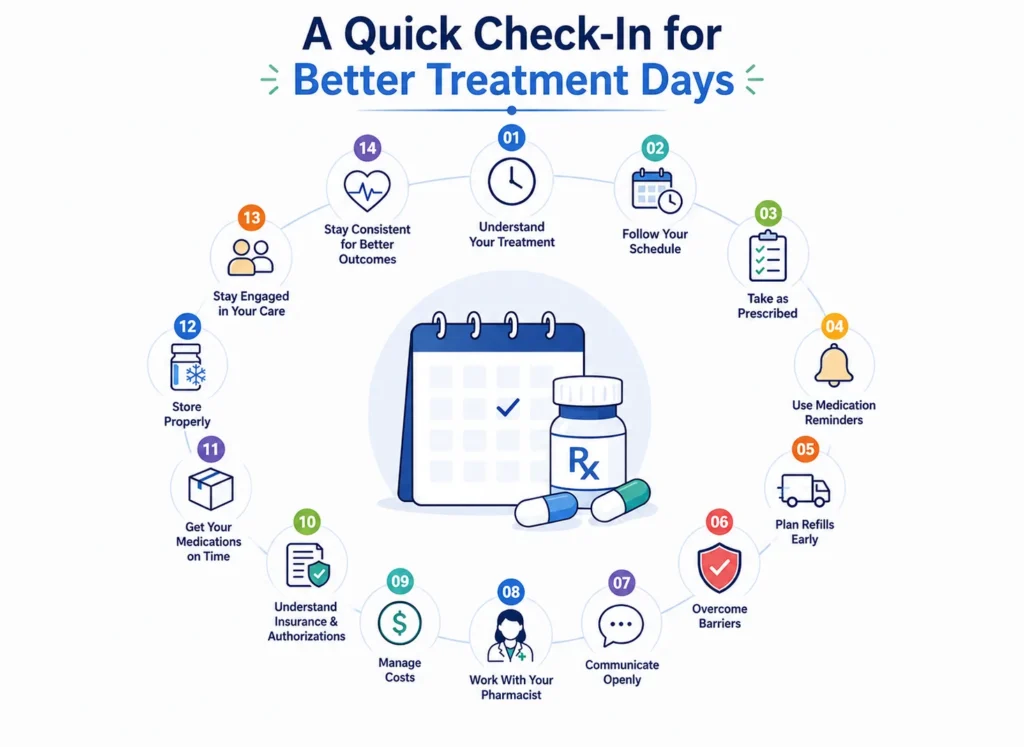
What Can Patients Do to Stay on Track With Specialty Medications?
Patients can take several practical steps to make specialty medication management easier:
- Follow the prescription instructions provided by the healthcare team.
- Keep track of upcoming refill dates.
- Use medication reminders when helpful.
- Store prescriptions according to their instructions.
- Ask questions when treatment instructions are unclear.
- Report side effects instead of stopping treatment independently.
- Contact the pharmacy early if insurance or delivery problems arise.
- Tell the pharmacy about changes to insurance or contact information.
- Ask about financial assistance if cost becomes a concern.
- Keep an updated list of prescriptions and supplements.
How SwyftScripts Supports Specialty Medication Adherence
SwyftScripts approaches adherence as part of ongoing specialty pharmacy care rather than simply prescription fulfillment. Its services include medication reminders, proactive refill coordination, adherence monitoring, pharmacist consultations, medication management, patient assistance programs, and home delivery.
Patients can also use the SwyftScripts platform to manage prescriptions, receive reminders, coordinate refills, and track deliveries. By combining prescription access with ongoing pharmacy support, SwyftScripts helps reduce some of the practical barriers that can make specialty medication adherence difficult.
Frequently Asked Questions
What can cause poor adherence to specialty medications?
Common barriers include forgetfulness, side effects, treatment complexity, prescription costs, insurance requirements, difficulty obtaining refills, delivery problems, and uncertainty about how to use a prescription.
Can a pharmacist help if I am having trouble taking my specialty medication?
Yes. Pharmacists can discuss dosing instructions, side effects, administration concerns, refill schedules, and other medication-related questions. They can also help identify issues that should be discussed with the prescribing provider.
What is medication synchronization?
Medication synchronization coordinates eligible prescriptions so they can be refilled around the same time. This can simplify prescription management for patients taking multiple medications.