

Starting a specialty treatment can involve more than receiving a prescription from your doctor. In many cases, the insurance company must first determine whether it will cover the prescribed therapy. This extra review is known as prior authorization.
For patients, prior authorization can feel like an invisible step between a doctor’s appointment and receiving a prescription. Behind the scenes, however, several parties may be involved in confirming coverage, supplying clinical information, responding to insurer requests, and arranging the prescription. Understanding how this process works can make it easier to know what to expect and where a specialty pharmacy can help, including coordinating a prescription delivery service once coverage is approved.
What Is Prior Authorization?
Prior authorization is an approval process used by a health insurance plan before it agrees to cover certain prescription drugs, treatments, or services. HealthCare.gov describes prior authorization as approval that may be required before filling a prescription for the plan to provide coverage. It may also be called preauthorization, prior approval, or precertification.
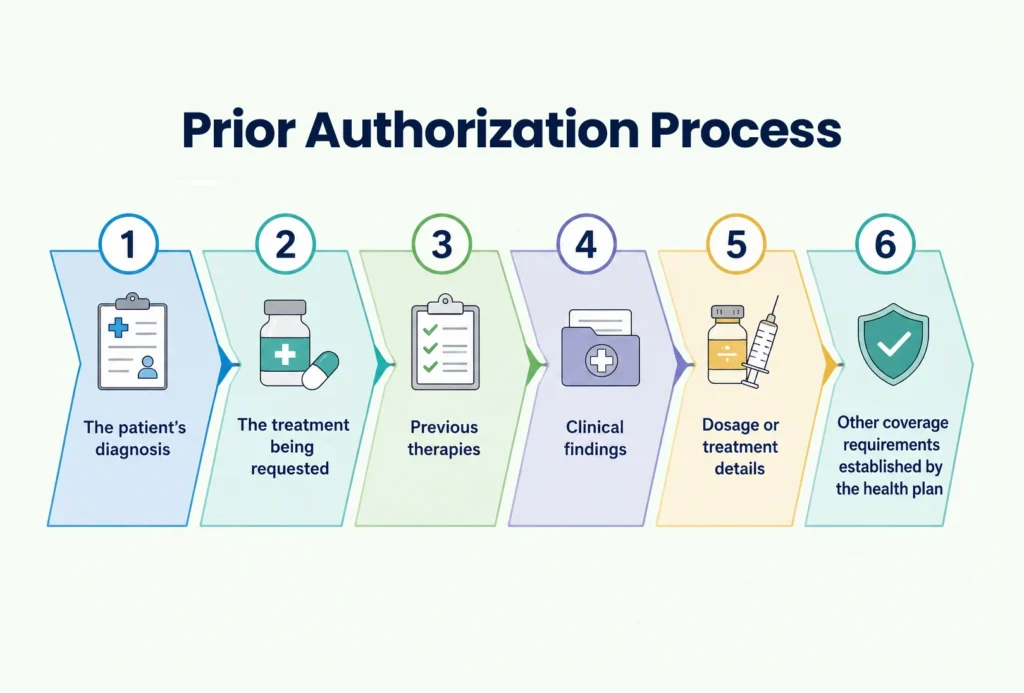
For specialty prescriptions, that review may involve information about:
- The patient’s diagnosis
- The treatment being requested
- Previous therapies
- Clinical findings
- Dosage or treatment details
- Other coverage requirements established by the health plan
Why Is Prior Authorization Common With Specialty Prescriptions?
Specialty therapies can involve complex conditions, specialized treatment plans, and significant healthcare costs. Insurance companies may therefore establish specific criteria that must be satisfied before they provide coverage. Prior authorization can help an insurer determine whether a prescribed treatment fits its coverage policy. That doesn’t mean a specialty prescription is automatically denied when PA is required. It simply means the insurer wants to review the request before coverage is finalized.
What Happens After a Doctor Prescribes a Specialty Medication?
The process can vary by insurance plan and pharmacy, but a specialty prescription typically passes through several important checkpoints before reaching the patient. If you are looking for a specialty pharmacy near me, understanding how prescription intake, insurance review, prior authorization, and fulfillment work can help you know what to expect.
1. The Prescription Enters the Pharmacy Process
The prescriber sends the specialty prescription to the appropriate pharmacy. SwyftScripts accepts prescriptions from healthcare providers through e-prescribing and fax. The pharmacy then reviews the prescription and begins identifying the requirements needed to process and fulfill it.
2. Insurance Requirements Are Identified
The pharmacy or care team reviews the patient’s coverage to determine whether additional requirements apply. Prior authorization is one possibility, but the plan may also have formulary restrictions, quantity limits, or specialty pharmacy requirements. A covered drug may still require additional approval before the insurance plan pays for it.
3. The Required Clinical Information Is Collected
If prior authorization is required, the prescribing provider may need to supply supporting clinical information. The insurer determines what documentation is necessary, which may include the diagnosis, treatment history, clinical notes, or other relevant information. Complete documentation can help reduce delays caused by missing or incomplete information.
4. The Request Goes to the Health Plan
The prior authorization request and required documentation are submitted to the patient’s insurance plan for review. The insurer evaluates the request according to its coverage criteria and policy requirements. While the pharmacy may help coordinate the submission and communication, the insurance company makes the final coverage determination.
5. The Insurer Makes a Decision
After reviewing the request, the health plan may approve it, request additional information, or deny coverage. The decision depends on the plan’s requirements and the documentation provided for review. An approval may also include conditions, such as a specific coverage period, quantity limit, or expiration date that affects future prescription fulfillment.
6. The Pharmacy Can Move Forward With Fulfillment
Once the required coverage approval is obtained, the pharmacy can continue processing the prescription. However, PA approval does not always mean immediate prescription delivery. The pharmacy may still need to confirm prescription details, coordinate payment or financial assistance, arrange delivery, and communicate with the patient before the specialty prescription is shipped.
Read Related: What is a specialty Pharmacy
Who Is Responsible for Prior Authorization?
Prior authorization isn’t necessarily handled by one person.
The Prescriber
The healthcare provider determines whether the specialty treatment is appropriate and supplies clinical information when required.
The Insurance Company
The insurer establishes the coverage criteria and reviews the authorization request.
The Specialty Pharmacy
A specialty pharmacy can help coordinate information between the healthcare provider, patient, and payer. SwyftScripts specifically provides prior authorization support and works with clinical teams to help ensure requests contain the information required by the insurance company.
What Can Cause a Prior Authorization to Take Longer?
A PA request may take longer when the insurer needs additional information or when the submission doesn’t satisfy the plan’s requirements.
Common reasons for delays can include:
- Missing clinical documentation
- Incorrect or outdated insurance information
- Additional information requested by the insurer
- Questions about the prescribed treatment
- Requirements related to previous therapies
- Changes in insurance coverage
- Requests submitted to the wrong payer or pharmacy
- A need for additional review
How Can a Specialty Pharmacy Help With Prior Authorization?
A specialty pharmacy can serve as a central point of coordination during the insurance approval process. Instead of leaving patients and provider offices to manage every pharmacy-related step independently, the pharmacy team can help identify requirements, communicate with the prescriber, and coordinate the next steps.
SwyftScripts lists prior authorization assistance, insurance coordination, financial assistance applications, and ongoing patient support among its specialty pharmacy services. Its prescriber services are designed to reduce administrative work by helping manage authorization paperwork and keeping provider offices informed about prescription progress.
What If the Insurance Company Denies the Request?
A denial can be frustrating, but it doesn’t always mean the treatment is no longer an option. The first step is to understand why the request was denied.
The denial notice may explain the insurer’s reasoning and provide information about available next steps. Depending on the circumstances and the patient’s plan, the healthcare provider or patient may be able to request reconsideration or submit an appeal.
The provider may also determine that additional clinical information should be supplied.
In some situations, the prescriber may discuss another treatment option that is covered by the patient’s plan. The appropriate response depends on the specific denial and insurance policy, so patients should review the insurer’s instructions rather than assuming every denial follows the same process.
Does an Approved Prior Authorization Last Forever?
No. A prior authorization approval may have a defined period of validity. The length of an approval depends on the insurance plan and the treatment.
When an authorization is approaching its expiration date, another review may be necessary to maintain coverage. This can be especially important for patients receiving long-term specialty therapy. Patients should ask their pharmacy or healthcare provider how long an approval remains active and whether additional authorization will be needed for continued treatment.
Can a Prior Authorization Be Renewed?
Yes, an authorization may need to be renewed when the original approval expires. A renewal can involve updated information demonstrating that the patient continues to meet the insurance plan’s requirements. For ongoing specialty treatment, staying ahead of expiration dates can help reduce the risk of an interruption in prescription access. A specialty pharmacy may assist with coordinating these requirements as part of ongoing prescription management.
Is Prior Authorization the Same as a Formulary Restriction?
No. These are different insurance concepts, although they can affect the same prescription. A formulary is the list or structure an insurance plan uses to determine which prescription drugs it covers and under what conditions. Prior authorization is an additional approval process that may be required before the plan covers a particular prescription. An insurance plan may have multiple requirements for the same drug. For example, a drug could be covered but require PA before the plan will pay for it.
Why Specialty Pharmacy Support Matters Beyond the Approval
SwyftScripts provides specialty pharmacy support that extends beyond prescription fulfillment, including pharmacist consultations, medication management services, patient assistance programs, medication reminders, and home delivery.
For prescribers, the pharmacy’s role can include helping coordinate insurance approvals and financial assistance while providing updates about prescription status. This broader approach matters because successful specialty treatment involves more than getting an insurance approval. Patients also need reliable access to their therapy after the approval is complete.
Making the Specialty Prescription Process Easier
Prior authorization can add another layer to the process of starting or continuing specialty treatment, but patients don’t necessarily have to navigate that process alone. The insurer establishes its coverage requirements, the healthcare provider supplies clinical information, and the specialty pharmacy can help coordinate the administrative and fulfillment steps in between.
At SwyftScripts, prior authorization support is part of a broader specialty pharmacy approach that includes insurance coordination, financial assistance, prescription fulfillment, pharmacist support, and home delivery. We also provide prior authorization support and home delivery to patients in Upper Kirby, Central Houston, Utah, and Vermont.
Frequently Asked Questions
How long does specialty medication prior authorization take?
There is no single timeframe for every PA request. Processing depends on the insurer, prescription, documentation, and whether additional information is requested.
Who handles prior authorization?
The prescriber, specialty pharmacy, insurance company, and patient can each have a role. The pharmacy may coordinate information and communication, while the insurer makes the coverage decision.
Can a specialty pharmacy submit a prior authorization?
A specialty pharmacy may help coordinate or submit PA information depending on the payer’s process and its arrangement with the prescriber. SwyftScripts provides prior authorization assistance for specialty prescriptions.