

Myasthenia gravis is a chronic autoimmune condition that disrupts communication between nerves and muscles, causing weakness that can affect movement, vision, swallowing, and breathing. While there is no universal cure, the right treatment can improve muscle strength, control symptoms, and reduce complications. Patients taking specialty medications may also benefit from a trusted specialty pharmacy near me that provides medication access, insurance support, and ongoing treatment management. SwyftScripts also delivers myasthenia gravis medications right to patients’ doors in Tanglewood, West Houston, Tennessee, and Texas City.
What Is Myasthenia Gravis?
Myasthenia gravis is an autoimmune disorder that affects communication between nerves and muscles, causing muscle weakness and fatigue. The immune system produces antibodies that interfere with nerve signals, making it harder for muscles to contract properly. Symptoms often improve with rest but may return during activity. Myasthenia gravis can affect muscles involved in:
- Eye movement and eyelid control: Causing drooping eyelids or double vision.
- Facial expressions: Affecting smiling, chewing, or facial movements.
- Swallowing and speaking: Making eating and communication more difficult.
- Arm and leg movement: Causing weakness during daily activities.
- Breathing: Severe cases may affect respiratory muscles and require urgent care.
Early diagnosis and proper treatment are important to manage symptoms, improve quality of life, and reduce the risk of serious complications.
Medications for Myasthenia Gravis
Medications help improve communication between nerves and muscles while reducing the immune system activity that causes myasthenia gravis. Treatment depends on symptom severity, the type of myasthenia gravis, and individual response to therapy. Patients receiving specialty medications may also benefit from specialty pharmacy support for medication access, insurance coordination, and ongoing care.
Cholinesterase Inhibitors
Cholinesterase inhibitors, such as pyridostigmine, increase acetylcholine levels to improve communication between nerves and muscles. They help reduce muscle weakness and improve daily activities like speaking, swallowing, and movement. These medications are commonly used to provide symptom relief.
Corticosteroids
Corticosteroids, such as prednisone, help reduce inflammation and suppress the immune system. They are often prescribed when symptoms are more severe or not well controlled with cholinesterase inhibitors alone. Healthcare providers monitor treatment closely to minimize long-term side effects.
Immunosuppressants
Immunosuppressants, including azathioprine, mycophenolate mofetil, and cyclosporine, help reduce the production of harmful antibodies. These medications are commonly used for long-term disease management and may take several months to reach their full effect. Regular blood tests help ensure treatment remains safe and effective.
Specialty Biologic and Targeted Therapies
Specialty medications such as Vyvgart®, Soliris®, Ultomiris®, and Rystiggo® may be prescribed for certain patients with generalized myasthenia gravis. These advanced therapies target specific immune pathways to help improve muscle strength and reduce symptoms. A specialty pharmacy can assist with prior authorizations, refill coordination, medication education, and ongoing treatment support.
Myasthenia Gravis Symptoms
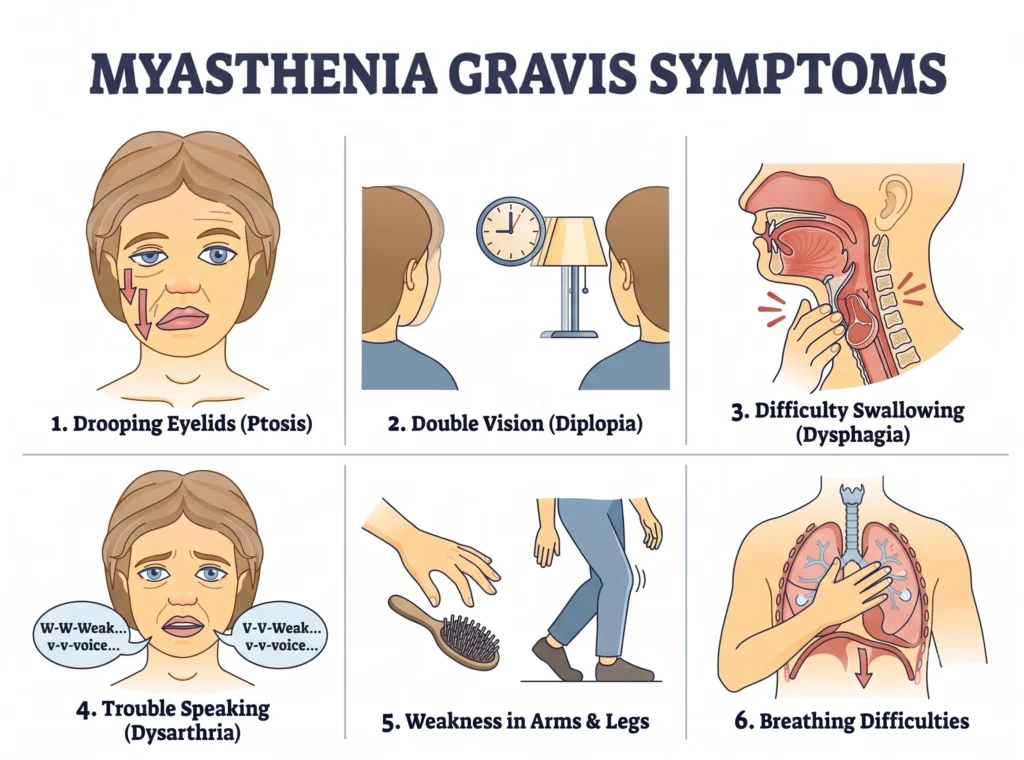
Symptoms of myasthenia gravis vary from person to person depending on which muscles are affected. Some people experience mild symptoms, while others may develop more widespread muscle weakness. Common symptoms include:
- Muscle weakness: Weakness that worsens with activity and improves with rest is one of the main signs of myasthenia gravis.
- Drooping eyelids: Weakness in the muscles controlling the eyelids can cause one or both eyelids to droop.
- Double vision: Eye muscle weakness may make it difficult to control eye movements.
- Difficulty swallowing: Weakness in throat muscles can make eating and drinking challenging.
- Trouble speaking: Speech may become soft, unclear, or difficult to maintain.
- Weakness in arms and legs: Everyday activities such as lifting objects, walking, or climbing stairs may become harder.
- Breathing difficulties: Severe muscle weakness can affect breathing and requires immediate medical attention.
Symptoms may change over time, which is why regular monitoring is important for adjusting treatment when needed.
Causes of Myasthenia Gravis
Myasthenia gravis occurs when the immune system mistakenly attacks the communication between nerves and muscles. The body produces antibodies that interfere with muscle signaling, causing weakness and fatigue. The thymus gland may also contribute to the condition by affecting immune system activity. Factors associated with myasthenia gravis may include:
- Autoimmune system changes: Abnormal immune responses that target healthy nerve-muscle connections.
- Antibody production: Harmful antibodies that block signals needed for proper muscle movement.
- Thymus gland disorders: Enlarged thymus or other thymus-related abnormalities.
- Family history: A higher risk in people with certain autoimmune conditions in their family.
- Immune system triggers: Factors that may activate abnormal immune responses.
Researchers continue to study the exact causes of myasthenia gravis, but treatments focus on controlling immune activity and improving muscle strength.
Myasthenia Gravis Diagnosis
Diagnosing myasthenia gravis involves evaluating muscle weakness and identifying problems with nerve-muscle communication. Doctors review your symptoms, perform a physical examination, and use specialized tests to confirm the diagnosis. Early and accurate diagnosis helps guide the most effective treatment plan.
Blood Tests
Blood tests help detect antibodies associated with myasthenia gravis and support the diagnosis. These tests also provide information about the autoimmune activity affecting nerve-muscle communication. Common blood tests include:
- Antibody testing: Detects antibodies linked to myasthenia gravis.
- Immune marker testing: Evaluates autoimmune activity to help guide treatment decisions.
Nerve and Muscle Tests
Nerve and muscle tests measure how well signals travel between nerves and muscles. They help determine whether muscle weakness is caused by impaired nerve-muscle communication. Common nerve and muscle tests include:
- Electromyography (EMG): Measures electrical activity in muscles to identify abnormal responses.
- Nerve stimulation tests: Evaluate how muscles respond to repeated nerve stimulation.
Imaging Tests
Imaging tests may be used to examine the thymus gland, which can play a role in myasthenia gravis. These tests help identify abnormalities that may influence treatment decisions. Common imaging tests include:
- CT scan: Detects thymus gland enlargement or thymomas.
- Chest imaging: Evaluates the thymus for structural abnormalities related to the condition.
Myasthenia Gravis Treatment
Treatment for myasthenia gravis focuses on improving muscle strength, controlling immune activity, and preventing severe symptoms. Care plans are personalized based on the patient’s condition, treatment response, and overall health. Some patients may also benefit from advanced therapies or procedures like thymectomy. Treatment options may include:
- Medications: Help improve nerve-muscle communication and reduce immune system activity.
- IVIG and plasma exchange: Provide short-term symptom relief during severe weakness or flare-ups.
- Thymectomy: A surgical procedure that removes the thymus gland and may benefit certain patients, especially those with thymomas or specific disease patterns.
- Ongoing monitoring: Regular follow-ups help adjust treatment and maintain symptom control.
IVIG Treatment for Myasthenia Gravis
Intravenous immunoglobulin (IVIG) therapy is a treatment that uses purified antibodies collected from healthy donors. IVIG may help regulate immune activity and reduce the effects of harmful antibodies involved in myasthenia gravis. Doctors may recommend IVIG when patients experience:
- Severe muscle weakness
- Rapid symptom worsening
- Myasthenic crisis risk
- The need for short-term symptom improvement
IVIG is usually administered under medical supervision because dosing and monitoring are important parts of safe treatment.
Plasma Exchange for Myasthenia Gravis
Plasma exchange, also called plasmapheresis, is a procedure that removes harmful antibodies from the blood. During this treatment, plasma containing abnormal antibodies is removed and replaced with healthy plasma or another replacement fluid. Plasma exchange may provide rapid symptom improvement and is often considered during severe flare-ups or when quick improvement is needed.
Living With Myasthenia Gravis
Living with myasthenia gravis requires ongoing treatment, regular follow-ups, and consistent medication management. A specialty pharmacy can support patients with complex therapies, including a reliable prescription delivery service to help maintain timely medication access.
Healthy management strategies include:
- Taking medications exactly as prescribed
- Keeping regular follow-up appointments
- Monitoring changes in muscle weakness or vision
- Getting enough rest and conserving energy
- Avoiding known triggers that worsen symptoms
- Using a specialty pharmacy for medication coordination and adherence support
Specialty Pharmacy Support for Myasthenia Gravis
Managing myasthenia gravis often involves specialty medications that require ongoing monitoring and coordination. SwyftScripts provides specialty pharmacy services that help simplify treatment with medication access, prescription coordination, refill management, patient education, and ongoing adherence support. Contact us today to learn how personalized pharmacy care can help you stay on track with your treatment.