
Psoriasis on the scalp can be frustrating and uncomfortable, often causing itching, flaking, and visible patches that affect daily confidence and comfort. In fact, the American Academy of Dermatology reports that about 50% of people with plaque psoriasis will experience at least one flare-up on the scalp, making effective management essential. If you’re searching for how to treat psoriasis on the scalp, knowing the right approach and exploring the best scalp psoriasis treatment options is the first step toward relief.
In this blog, we’ll explain what causes psoriasis on the scalp and explore proven methods for treating psoriasis on the scalp, helping you regain control and maintain a healthier scalp. We’ll also cover the common symptoms to watch for and how scalp psoriasis is diagnosed, so you can better understand the condition and seek the right treatment at the right time.
Start your journey to a healthier scalp today, get your doctor-prescribed medications for treating psoriasis on the scalp conveniently delivered to your door with SwyftScripts. We also provide scalp psoriasis medications to patients in Gulfton, Southwest Houston, Harrisburg, and Hartford as well.
What Causes Scalp Psoriasis
Scalp psoriasis occurs when the immune system becomes overactive and mistakenly speeds up the growth of skin cells on the scalp. Normally, skin cells take about 28–30 days to form and shed, but in psoriasis, this process happens in just 3–4 days. As a result, excess skin cells build up and form thick, scaly patches. Understanding scalp psoriasis causes can help identify triggers and manage flare-ups more effectively. Common scalp psoriasis causes and triggers include:
- Genetics: A family history of psoriasis increases the risk
- Immune system dysfunction: The body attacks healthy skin cells by mistake
- Stress: Emotional or physical stress can trigger flare-ups
- Cold and dry weather: These conditions often worsen symptoms
- Infections: Such as strep throat or other illnesses
- Medications: Including lithium, beta-blockers, and some antimalarial drugs
- Skin injury or irritation: Scratching, tight hairstyles, or harsh hair products
While scalp psoriasis is not contagious, identifying and avoiding personal triggers plays a key role in reducing flare-ups and keeping symptoms under control.
Signs and Symptoms of Scalp Psoriasis
Scalp psoriasis symptoms can vary from mild flaking to severe inflammation that extends beyond the hairline. In many cases, symptoms develop gradually and may worsen during flare-ups triggered by stress, weather changes, or illness. Common scalp psoriasis symptoms include:
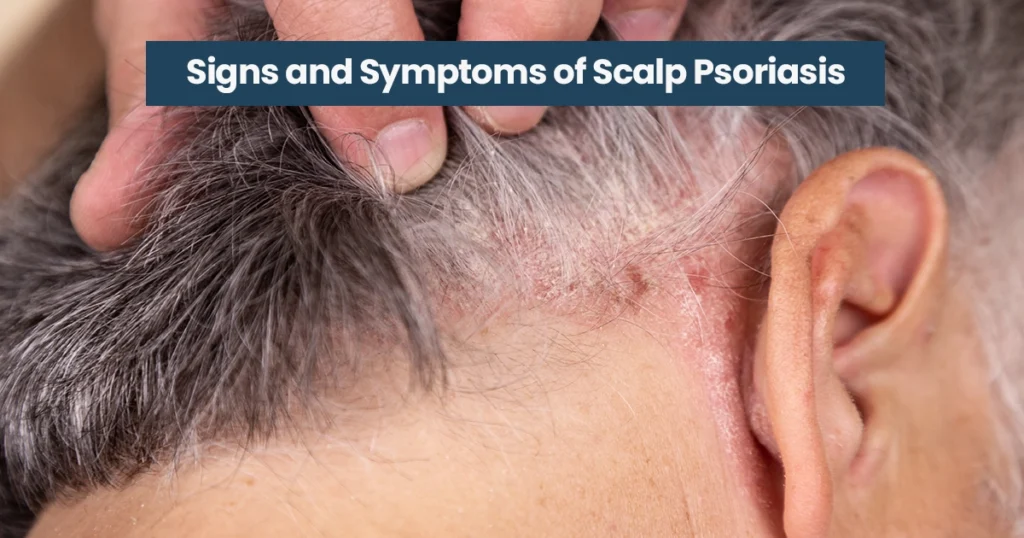
- Red or inflamed patches on the scalp, often covered with thick scales
- White or silvery scales that may look like dandruff but are usually thicker and drier
- Itching or burning sensation, which can range from mild to intense
- Dryness and cracking that may cause bleeding in severe cases
- Flaking onto shoulders, especially when brushing or scratching the hair
- Temporary hair shedding, often caused by scratching or removing scales forcefully
In some people, scalp psoriasis can spread beyond the scalp to the forehead, behind the ears, or the back of the neck. While the condition is not contagious, recognizing these symptoms early can help you seek proper treatment and prevent discomfort from worsening.
How Is Scalp Psoriasis Diagnosed?
According to the American Academy of Dermatology, scalp psoriasis is usually diagnosed by a dermatologist through a clinical evaluation. In most cases, no complex tests are needed, as the condition has distinct signs that trained professionals can recognize.
Common steps in diagnosis include:
- Physical examination: The doctor examines the scalp for red patches, thick scales, and well-defined plaques. They may also check other areas of the body where psoriasis commonly appears, such as elbows, knees, or behind the ears.
- Medical history: You may be asked about symptoms, flare-ups, family history of psoriasis, stress levels, and recent illnesses or medications.
- Ruling out similar conditions: Scalp psoriasis can resemble dandruff, seborrheic dermatitis, or fungal infections, so doctors carefully assess scale thickness, redness, and distribution.
- Skin biopsy (rare cases): If the diagnosis is unclear, a small skin sample may be taken and examined under a microscope to confirm psoriasis.
Early and accurate diagnosis is important because scalp psoriasis often requires specific treatments that differ from those used for dandruff or other scalp conditions. Identifying the condition correctly helps ensure more effective and long-lasting symptom control.
Treatment for Psoriasis on Scalp
Scalp psoriasis treatment focuses on reducing inflammation, controlling scaling, and easing itching while preventing frequent flare-ups. Because psoriasis on the scalp can range from mild to severe, treatment plans are often tailored to the severity of symptoms and how the condition responds over time. With consistent care, even chronic forms of psoriasis scalp disease can be effectively managed. Common options for treating psoriasis on the scalp include:
Medicated Shampoos
Shampoos containing coal tar or salicylic acid help reduce scaling and soften thick plaques. They are particularly effective for plaque psoriasis on the scalp, as they break down stubborn buildup and soothe irritation. Regular use as directed can improve scalp comfort and make other treatments more effective.
Topical Corticosteroids
These are anti-inflammatory medications available as foams, lotions, or solutions. They help reduce redness, swelling, and itching and are often prescribed for moderate to severe psoriasis on scalp flare-ups. According to NCBI, topical corticosteroids are typically considered first-line therapy, and combinations such as calcipotriol plus a steroid have been found to be more effective than using a single agent alone. Using them under medical supervision ensures safe and effective treatment.
Vitamin D Analogs
Vitamin D derivatives, applied directly to the scalp, slow down rapid skin cell growth. They are sometimes used alone or in combination with corticosteroids to provide long-term control and minimize flare-ups of psoriasis scalp disease.
Scale-Softening Treatments
Oils such as mineral oil or coconut oil can be applied to loosen thick scales. This makes it easier for medicated treatments to penetrate plaques and improves the effectiveness of other therapies for treating psoriasis on the scalp.
Light Therapy (Phototherapy)
Controlled UVB light exposure can be used when topical treatments are insufficient. Light therapy slows skin cell growth and reduces inflammation, helping manage chronic psoriasis on scalp symptoms.
Systemic or Biologic Medications
For severe or resistant cases, oral or injectable medications may be prescribed to target the immune system directly. These treatments are closely monitored by a specialist and are effective for persistent plaque psoriasis of the scalp or widespread psoriasis scalp disease.
How Patients Typically Progress:
- Mild dandruff-like flakes → medicated shampoo
- Moderate plaques → topical steroids + vitamin D
- Severe cases → dermatologist + systemic therapy
In conclusion, managing psoriasis on the scalp requires ongoing care, trigger avoidance, and adherence to treatment. While there is no cure, consistent scalp psoriasis treatment can significantly reduce symptoms, improve scalp health, and enhance overall quality of life.
Home Remedies for Scalp Psoriasis Disease
While medical treatments are essential for controlling psoriasis on the scalp, several home remedies can help soothe irritation, reduce scaling, and complement professional care. These remedies are particularly useful for mild to moderate psoriasis scalp disease.
- Aloe Vera Gel: Aloe vera has natural anti-inflammatory and moisturizing properties. Applying fresh aloe vera gel to the scalp can reduce redness, itching, and scaling. Leave it on for 20–30 minutes before rinsing with lukewarm water.
- Coconut Oil: Coconut oil acts as a natural moisturizer and scale softener. Massage warm coconut oil into the scalp and leave it for a few hours or overnight. This helps loosen thick plaques and makes medicated shampoos more effective.
- Apple Cider Vinegar: Diluted apple cider vinegar (1 part vinegar to 1 part water) can help relieve itching and irritation. Apply it to the scalp and rinse after a few minutes. Avoid using it on cracked or bleeding skin, as it may cause stinging.
- Oatmeal Rinse or Paste: Oatmeal has soothing properties that can calm itching and inflammation. Mix ground oatmeal with water to make a paste, or use an oatmeal rinse during shampooing.
- Tea Tree Oil: Tea tree oil has natural antiseptic and anti-inflammatory properties. Add a few drops to your shampoo or dilute with a carrier oil and apply to the scalp. Use cautiously, as it may cause irritation in sensitive skin.
- Warm Baths with Epsom Salt or Dead Sea Salt: Soaking the scalp and affected areas in a warm bath with Epsom or Dead Sea salts can loosen scales, reduce inflammation, and soothe itching. Rinse thoroughly afterward.
- Maintain a Healthy Lifestyle: Manage stress, as it’s a major trigger for flare-ups. Eat an anti-inflammatory diet rich in fruits, vegetables, and omega-3 fatty acids. Stay hydrated and avoid excessive alcohol or smoking, which may worsen symptoms.
These home remedies cannot cure scalp psoriasis permanently, but they can help relieve discomfort, reduce flare-ups, and support medical treatments. For severe or persistent cases, always consult a dermatologist before trying new remedies.
How to Cure Scalp Psoriasis Permanently
Currently, there is no permanent cure for scalp psoriasis. Psoriasis is a chronic autoimmune condition, which means it tends to flare up over time, even after successful treatment. However, with proper care and management, you can control symptoms effectively, reduce flare-ups, and maintain a healthy scalp.
Key Points About Permanent Cure
- Psoriasis cannot be completely eradicated because it is linked to an overactive immune system.
- Treatments focus on controlling inflammation, slowing skin cell growth, and reducing discomfort.
- Consistent care and trigger management can make symptoms much less frequent or severe, giving the appearance of remission.
How to Manage and Keep Flare-Ups Away
- Follow prescribed treatments: Topical therapies, medicated shampoos, or systemic medications can keep symptoms under control.
- Identify triggers: Stress, infections, weather changes, certain medications, or skin injuries can worsen scalp psoriasis. Avoiding or managing these helps reduce flare-ups.
- Maintain scalp care: Regularly using gentle shampoos, moisturizing, and softening scales can prevent irritation.
- Healthy lifestyle habits: A balanced diet, stress management, and adequate sleep support immune health and reduce flare frequency.
While a permanent cure isn’t possible yet, early diagnosis and consistent scalp psoriasis treatment can allow people to live comfortably with minimal symptoms.
Get Your Psoriasis Medications Delivered with SwyftScripts
Managing psoriasis on the scalp requires consistent treatment, and sometimes getting the right medications can be a challenge. SwyftScripts makes it easy by delivering medications prescribed by your doctor directly to your door, so you never miss a dose.
Whether you’re following a treatment plan for how to treat psoriasis on the scalp or managing flare-ups, SwyftScripts ensures your prescriptions arrive safely, conveniently, and on time, helping you stay on track with your scalp psoriasis care.