

Leukemia medication is essential in treating leukemia, offering hope and improved outcomes for patients. Modern treatments, including chemotherapy, targeted therapy, and immunotherapy, stop cancerous blood cells and help maintain quality of life. With an estimated 66,890 new leukemia cases in the U.S. in 2025, according to the National Cancer Institute and American Cancer Society, timely access to these medications is crucial.
Patients in Houston can obtain these life-saving treatments through a specialty pharmacy Houston. If you are searching for a prescription delivery service near me, our pharmacy provides expert guidance, personalized support, and ensures medications arrive safely and on time. We also provide these life-saving medications to patients in Hilshire Village, Honolulu, and Houston Heights, Central Houston as well.
H2: What Is Leukemia?
Leukemia is a type of cancer that starts in the blood or bone marrow, the soft tissue inside your bones that makes blood cells. Normally, your body produces healthy blood cells that fight infections, carry oxygen, and help stop bleeding. In leukemia, your bone marrow produces abnormal white blood cells that don’t work properly and can crowd out healthy blood cells. This can lead to fatigue, frequent infections, easy bruising or bleeding, and other health problems.
Types of Leukemia
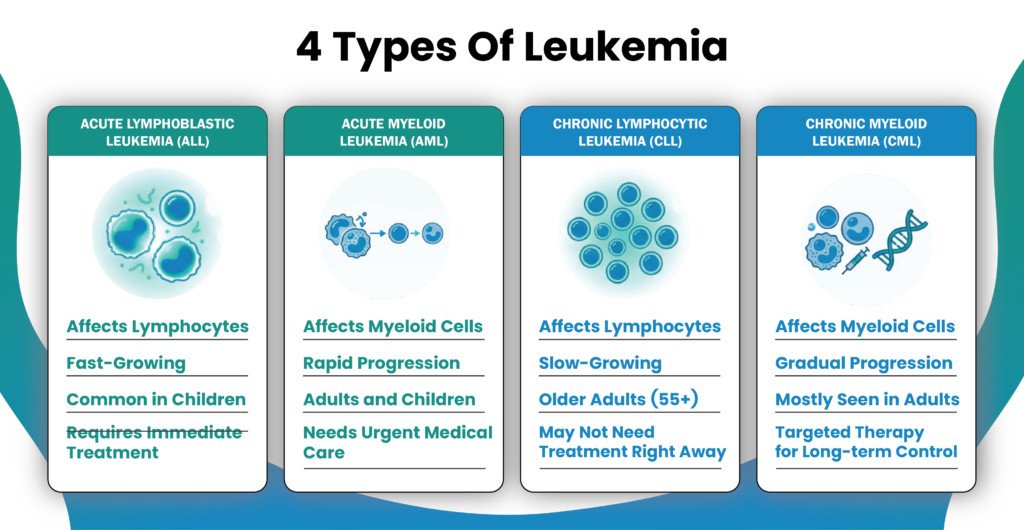
Leukemia isn’t just one disease, it has several types, mainly based on how fast it grows and which blood cells are affected.
1. Acute Leukemia
Acute leukemia is a fast-growing form of blood cancer that requires immediate treatment. It develops quickly in the bone marrow, causing the rapid production of abnormal blood cells that cannot function properly. There are two main types:
- Acute Lymphoblastic Leukemia (ALL), which affects lymphocytes, a type of white blood cell crucial for fighting infections.
- Acute Myeloid Leukemia (AML), which affects myeloid cells, the precursors to red blood cells, platelets, and certain white blood cells.
2. Chronic Leukemia
Chronic leukemia grows more slowly than acute leukemia and may not need immediate treatment when first diagnosed. Over time, the abnormal blood cells can accumulate and interfere with normal blood cell function, leading to fatigue, infections, and other complications. Chronic leukemia also has two main types:
- Chronic Lymphocytic Leukemia (CLL), which mainly affects lymphocytes and is more common in older adults.
- Chronic Myeloid Leukemia (CML), which affects myeloid cells and is often managed with targeted medications that can control the disease for many years.
Leukemia Medications by Type of Leukemia
According to the National Cancer Institute, the following medications are approved for treating different types of leukemia. These drugs are designed to control the growth of abnormal blood cells and improve patient outcomes. Different types of leukemia require specific medications, chosen based on the blood cells affected and how quickly the disease progresses.
1. Medications for Acute Lymphoblastic Leukemia (ALL)
Acute Lymphoblastic Leukemia (ALL) is a fast-growing blood cancer that affects lymphocytes, a type of white blood cell. Treating ALL typically involves medication for leukemia cancer that targets these rapidly dividing cells to help restore healthy blood cell function. Commonly used drugs for ALL include:
- Methotrexate slows or stops the growth of leukemia cells.
- Mercaptopurine (Purinethol, Purixan) interferes with DNA production in cancer cells.
- Cytarabine attacks leukemia cells in the bone marrow.
- Daunorubicin Hydrochloride damages leukemia cell DNA to prevent replication.
- Vincristine Sulfate blocks leukemia cells from dividing.
- Imatinib Mesylate (Gleevec) is specifically used for Philadelphia chromosome-positive ALL.
2. Medications for Acute Myeloid Leukemia (AML)
Acute Myeloid Leukemia (AML) affects myeloid cells and progresses quickly. During any leukemia medical procedure, medications for AML are used to eliminate abnormal cells while supporting healthy blood cell recovery. Key drugs for AML include:
- Cytarabine is the main chemotherapy drug for AML.
- Daunorubicin Hydrochloride is commonly paired with cytarabine for effective treatment.
- Idarubicin Hydrochloride (Idamycin PFS) damages cancer cell DNA to prevent growth.
- Gemtuzumab Ozogamicin (Mylotarg) targets AML cells specifically.
- Midostaurin (Rydapt) is used for AML with FLT3 gene mutations.
- Azacitidine (Onureg) helps control leukemia cell growth in certain AML patients.
3. Medications for Chronic Lymphocytic Leukemia (CLL)
Chronic Lymphocytic Leukemia (CLL) grows slowly and mainly affects lymphocytes. Drugs for blood cancer in CLL focus on controlling disease progression and keeping patients healthy over the long term. Popular drugs include:
- Ibrutinib blocks signals that leukemia cells need to survive.
- Venetoclax triggers leukemia cells to die.
- Obinutuzumab is a monoclonal antibody that targets abnormal lymphocytes.
- Rituximab is another antibody that helps the immune system destroy leukemia cells.
4. Medications for Chronic Myeloid Leukemia (CML)
Chronic Myeloid Leukemia (CML) usually progresses slowly, and treatment often involves long-term management with targeted medications. Drugs commonly used for CML include:
- Imatinib Mesylate (Gleevec) is a first-line medication that inhibits the BCR-ABL protein driving CML.
- Dasatinib (Sprycel) is used when patients need an alternative to imatinib.
- Ponatinib Hydrochloride (Iclusig) is reserved for advanced-phase or resistant CML cases.
Effectiveness of Leukemia Medications
Leukemia medications have significantly improved patient outcomes, and this is supported by national cancer data. According to the National Cancer Institute, the overall 5‑year relative survival rate for people diagnosed with leukemia is 67.8%, meaning many patients live at least five years after diagnosis, a major improvement compared with past decades.
For specific types of leukemia, survival rates reflect how effective treatments and medications have become:
- Chronic Myeloid Leukemia (CML): Targeted drugs like imatinib and other tyrosine kinase inhibitors have transformed CML from a once‑fatal disease into a manageable condition. Today, patients treated with these medications often have survival rates close to normal life expectancy, with long‑term survival around 85–90% over 10 years in many studies.
- Acute Lymphoblastic Leukemia (ALL): Thanks to advanced chemotherapy and targeted agents, especially in children, five‑year survival rates can exceed 80–90% in younger patients.
- Chronic Lymphocytic Leukemia (CLL): With modern drugs, many patients live for years with controlled disease.
- Acute Myeloid Leukemia (AML): AML remains more challenging, but effective use of chemotherapy and newer agents has steadily improved outcomes.
Get Your Leukemia Medication Delivered with SwyftScripts
Accessing the right leukemia medication and other specialty treatments has never been easier. If you are searching for a specialty pharmacy near me, SwyftScripts is a trusted option where patients can have prescriptions carefully managed and delivered directly to their doorstep. With proper certification and expert oversight, every prescription is handled safely and securely, giving you peace of mind while staying on track with your treatment.