
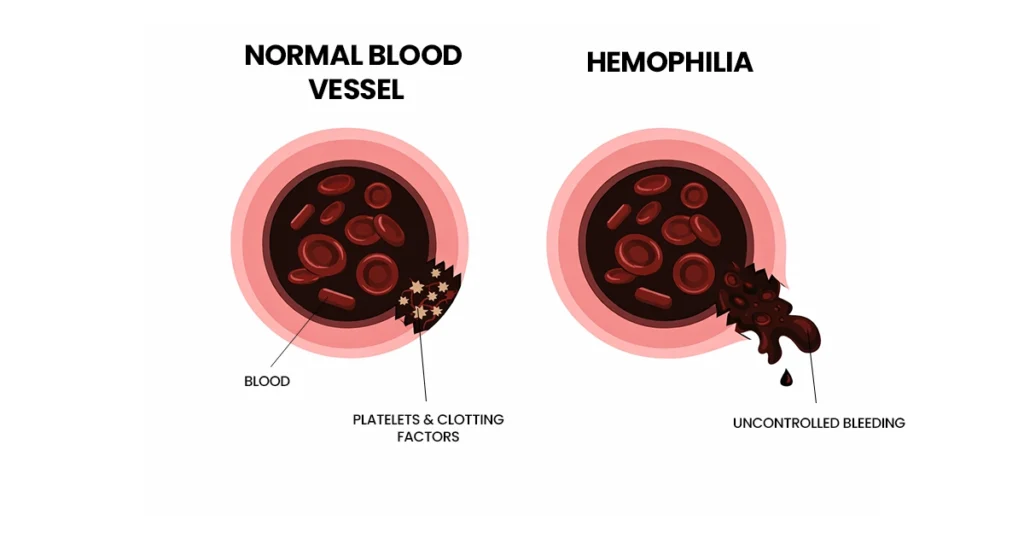
Hemophilia is a rare inherited bleeding disorder that affects the body’s ability to clot blood properly, leading many people to ask what hemophilia is and how it impacts daily life. This condition occurs when the blood lacks certain clotting factors, causing prolonged bleeding after injuries and, in some cases, spontaneous internal bleeding. The two most common types are hemophilia A and B, each caused by a deficiency in different clotting factors, with hemophilia B also known as Christmas disease.
Understanding the basics of hemophilia is the first step toward recognizing its symptoms, causes, and available treatment options. With SwyftScripts, patients can receive their medications right at home, making treatment simpler and more convenient.
What Is Hemophilia Disease
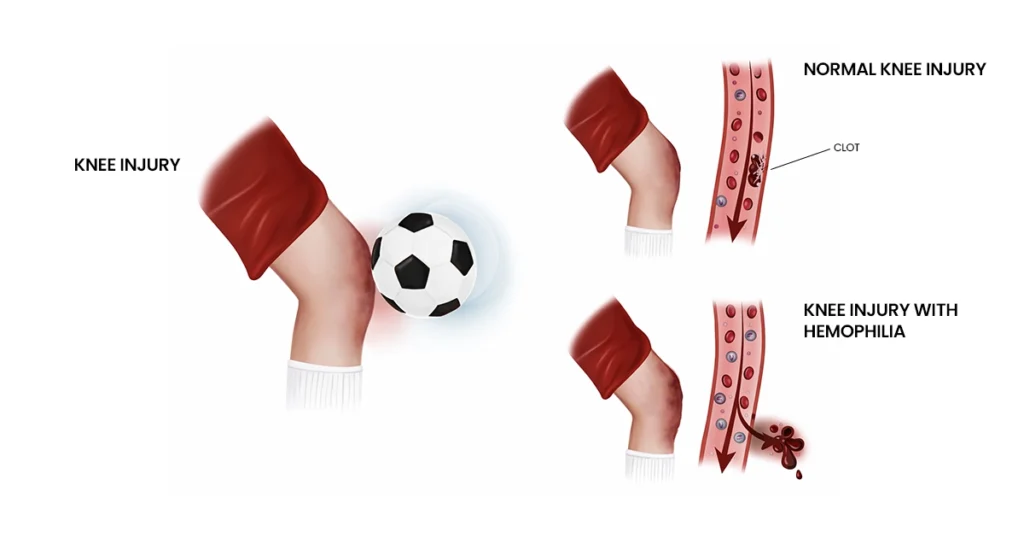
Hemophilia is a genetic (inherited) disease that affects how blood clots. In a healthy person, blood quickly forms a clot to stop bleeding after a cut or injury. In someone with hemophilia, the blood does not clot properly, so bleeding can last much longer than normal.
This happens because the body is missing certain clotting factors, which are proteins that help stop bleeding. There are two main types: hemophilia A, caused by low clotting factor VIII, and hemophilia B, caused by low clotting factor IX (also called Christmas disease).
In the United States, about 33,000 males are estimated to be living with hemophilia, making awareness and proper care essential. People with hemophilia may bleed easily, get frequent nosebleeds, bruise easily, or have bleeding inside joints and muscles. While hemophilia has no cure, it can be managed with proper medical care, allowing many people to live healthy and active lives.
Is Hemophilia a Genetic Disease?
Yes, hemophilia is a genetic disease.
Hemophilia is usually passed down from parents to children through genes. It is most commonly inherited in an X-linked pattern, which means the gene responsible for hemophilia is located on the X chromosome. Because males have only one X chromosome, they are more likely to have hemophilia if they inherit the affected gene. Females have two X chromosomes, so they are usually carriers and may not show symptoms, though some can have mild bleeding issues.
In some cases, hemophilia can occur without any family history. This happens due to a new (spontaneous) genetic mutation. Even then, it is still considered a genetic condition.
While hemophilia cannot be prevented, early diagnosis and proper treatment can help people manage the condition and live healthy, active lives.
Types of Hemophilia
Hemophilia is mainly divided into three types based on which clotting factor is missing or low in the blood. Each type affects blood clotting in a slightly different way.
1. Hemophilia A (Factor VIII Deficiency)
Hemophilia A is the most common type of hemophilia, occurring 3–4 times more often than Hemophilia B. It is caused by a factor 8 deficiency, also known as factor VIII hemophilia. People with this type do not have enough clotting factor VIII, which is essential for stopping bleeding. Because of this, bleeding can last longer after injuries, surgeries, or even occur inside joints and muscles without obvious injury.
2. Hemophilia B (Factor IX Deficiency)
Hemophilia B happens when the body lacks clotting factor IX. It is sometimes called Christmas disease. The symptoms are very similar to Hemophilia A, including easy bruising and prolonged bleeding, but it is less common than factor VIII hemophilia.
3. Hemophilia C (Factor XI Deficiency)
Hemophilia C is a rarer and usually milder form of hemophilia. It is caused by a deficiency of clotting factor XI. People with this type often do not have spontaneous bleeding and may only experience excessive bleeding after surgery or injury.
What Is the Difference Between Hemophilia A and B?
The main difference between Hemophilia A and Hemophilia B is which clotting factor is missing in the blood. Both are genetic bleeding disorders and have very similar symptoms, but they are caused by different factor deficiencies.
Hemophilia A
- Caused by a lack of clotting factor VIII
- Also called factor VIII hemophilia
- It is the most common type of hemophilia
- Leads to prolonged bleeding, easy bruising, and bleeding into joints and muscles
Hemophilia B
- Caused by a lack of clotting factor IX
- Also known as Christmas disease
- Less common than Hemophilia A
- Symptoms are similar, but treatment uses factor IX replacement instead of factor VIII
Key Difference: Hemophilia A and B affect the body in the same way, but Hemophilia A is due to the missing factor VIII, while Hemophilia B is due to the missing factor IX. The type of hemophilia determines the specific treatment needed.
What Causes Hemophilia?
Hemophilia is caused by a problem in the genes that control blood clotting.
- Inherited Genetic Mutation: Most people with hemophilia are born with it. The condition is passed from parents to children through a faulty gene that affects clotting factors. This gene change prevents the body from making enough clotting factor VIII or IX, which are needed to stop bleeding.
- X-Linked Inheritance: Hemophilia A and B are usually inherited in an X-linked pattern. This means the gene is located on the X chromosome. Males are more likely to have hemophilia, while females often carry the gene and may pass it on to their children.
- Spontaneous (New) Mutation: In some cases, hemophilia occurs even when there is no family history. This happens because of a new genetic mutation that develops before birth.
Common Symptoms of Hemophilia
The symptoms of hemophilia are mainly related to excessive or prolonged bleeding, because the blood does not clot properly. Symptoms can vary from mild to severe depending on how low the clotting factor levels are.
Common Signs and Symptoms:
- Bleeding that lasts longer than normal after cuts, injuries, or dental work
- Easy bruising, often with large or deep bruises
- Frequent nosebleeds that are hard to stop
- Bleeding into joints (such as knees, elbows, or ankles), causing pain, swelling, and stiffness
- Bleeding into muscles, which can lead to pain and limited movement
- Blood in urine or stool in some cases
- Excessive bleeding after surgery or injections
Symptoms in Infants and Children:
- Unusual bruising when the baby starts crawling or walking
- Prolonged bleeding after circumcision
- Irritability or swelling caused by internal bleeding
How Is Hemophilia Diagnosed?
Hemophilia is diagnosed through a combination of medical history, family history, and blood tests. Since the condition affects blood clotting, doctors look for signs of prolonged bleeding and confirm it with lab tests.
1. Medical and Family History:
- Doctors ask about frequent or unusual bleeding after cuts, injuries, or surgeries.
- They also check if family members have hemophilia, since it is usually inherited.
2. Physical Examination:
- The doctor may look for bruises, joint swelling, or signs of internal bleeding.
3. Blood Tests:
- Clotting factor tests: Measure the levels of factor VIII (for Hemophilia A) or factor IX (for Hemophilia B) in the blood.
- Activated partial thromboplastin time (aPTT): Checks how long it takes for blood to clot.
- Genetic testing: Can confirm the exact gene mutation, especially if family history is unclear.
Early diagnosis is important to prevent serious bleeding complications and to start proper treatment, allowing people with hemophilia to live healthy, active lives.
What Is the Treatment for Hemophilia?
Hemophilia cannot be cured, but it can be managed effectively with proper treatment. The main goal is to replace the missing clotting factor to prevent or control bleeding. According to WFH’s Guidelines for the Management of Hemophilia, regular clotting factor replacement, timely medical care, and individualized treatment plans are essential to minimize bleeding episodes and protect joint health.
1. Clotting Factor Replacement Therapy
- People with Hemophilia A receive factor VIII concentrates.
- People with Hemophilia B receive factor IX concentrates.
- These can be given regularly (preventive/prophylactic) or when bleeding occurs.
- Factor concentrates can be plasma-derived or recombinant (made in a lab).
2. Desmopressin (DDAVP)
- Used for mild Hemophilia A.
- Helps the body release more factor VIII naturally.
3. Medications to Control Bleeding
- Antifibrinolytics (like tranexamic acid) help prevent blood clots from breaking down too quickly.
- Pain relievers like acetaminophen can reduce discomfort from joint bleeding (avoid aspirin, which affects clotting).
4. Physical Therapy
- Helps prevent joint damage caused by repeated bleeding into joints.
- Strengthens muscles to support joints and improve mobility.
5. Gene Therapy (Emerging Treatment)
- New treatments aim to correct the faulty gene so the body can produce its own clotting factor.
- Still under research, but shows promising results for long-term management.
What Is the Life Expectancy of Someone With Hemophilia?
Thanks to modern medical care, the average lifespan of hemophilia patients has improved significantly over the years. With proper treatment, preventive care, and management of bleeding episodes, many people with hemophilia can live nearly as long as those without the condition.
With modern treatments, the average lifespan of hemophilia patients is now around 60–70 years or more, compared to much lower life expectancy in the past. Early diagnosis, proper treatment, and healthy lifestyle choices play a key role in helping people with hemophilia live long and active lives.
Take Control of Hemophilia with Expert Support
Understanding what hemophilia is, including Hemophilia A and B, and recognizing the manifestations of hemophilia is the first step toward effective management and a healthier life. From prolonged bleeding to joint complications, knowing the symptoms and treatment options empowers patients and caregivers to act promptly.
To make managing hemophilia easier, SwyftScripts serves as a trusted specialty pharmacy partner. They handle prescriptions end-to-end, including insurance approvals, complex paperwork, cost assistance, and even free home delivery—so patients get their medications on time, and employers can reduce healthcare costs. With SwyftScripts, accessing the right treatment for hemophilia has never been simpler or more reliable.