

Eczema is a complex, chronic inflammatory condition characterized by severe itching, cracking, and painful skin lesions that require specialized medical management. Moderate to severe cases are typically treated with advanced therapies, ranging from prescription topical agents to modern biologic injections that target underlying immune system hyperactivity. Because of its relapsing nature, ongoing care under medical supervision is essential to ensure consistent, safe, and effective treatment outcomes.
Specialty medications play a key role in managing severe cases of eczema by helping block the specific inflammatory pathways that cause the skin to react. Through a specialty pharmacy near me, patients can access these advanced treatments along with dedicated medication management, insurance authorization assistance, and ongoing clinical support throughout their dermatological care journey.
Understanding Eczema (Atopic Dermatitis)
Eczema, formally known as Atopic Dermatitis (AD), is an immune-driven inflammatory skin disorder where an overactive immune system attacks the skin barrier, leaving it vulnerable to profound moisture loss and environmental irritants. According to official clinical documentation from the Texas Health and Human Services Commission (HHSC), the hallmark symptom of this chronic condition is intense pruritus (itching), which inevitably leads to scratching, secondary infections, and heavily thickened skin lesions. Because it is closely linked to genetic factors and other atopic conditions like asthma, moderate to severe cases are highly unlikely to resolve without long-term, targeted prescription medical intervention.
Eczema Symptoms That Require Medical Attention
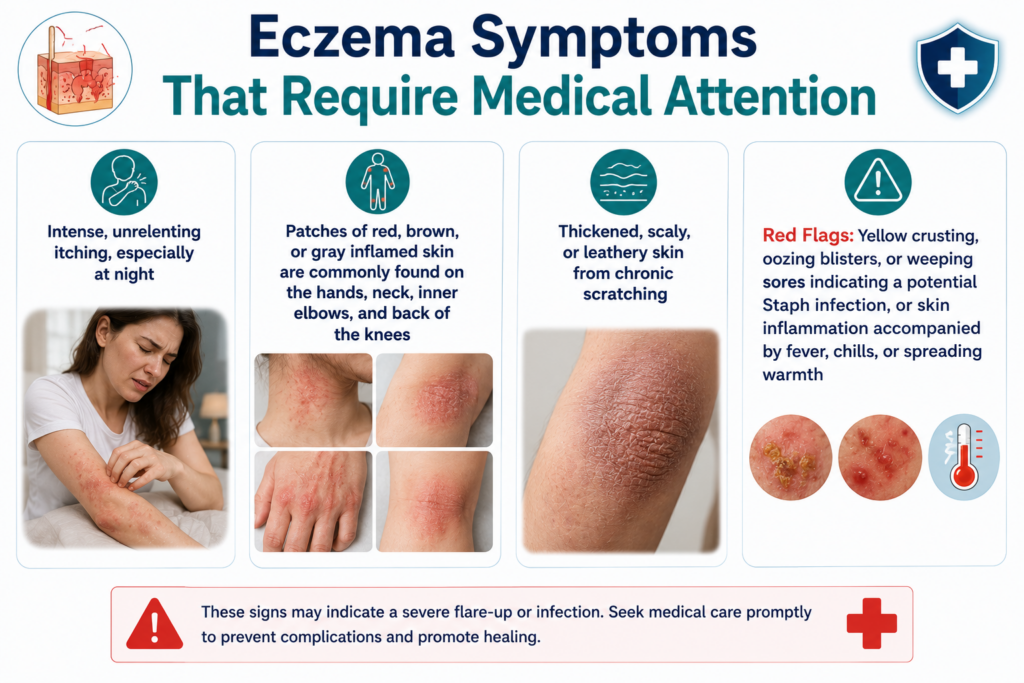
Eczema symptoms vary significantly from person to person, often shifting rapidly during an acute flare-up triggered by stress, weather changes, or local allergens. Because the intense urge to scratch damages the skin barrier, identifying complications early is vital to prevent severe systemic risks.
Recognizing the signs of a severe or infected flare-up is important for proper management:
- Intense, unrelenting itching, especially at night
- Patches of red, brown, or gray inflamed skin are commonly found on the hands, neck, inner elbows, and back of the knees
- Thickened, scaly, or leathery skin from chronic scratching
- Red Flags: Yellow crusting, oozing blisters, or weeping sores indicating a potential Staph infection, or skin inflammation accompanied by fever, chills, or spreading warmth
Eczema Medication: Targeted Treatments For Relief
Regular monitoring and follow-ups with a dermatologist or allergist are important when managing eczema to ensure treatment remains effective and safe over time. Careful assessment of skin clearance, itch reduction, and overall health helps guide appropriate adjustments in care.
Topical Therapies
For mild to moderate eczema, topical medications applied directly to the skin are the first line of defense. They work locally to suppress the immune response and reduce acute inflammation.
- Topical Corticosteroids: These are the most common initial treatments. Ranging from mild over-the-counter hydrocortisone to highly potent prescription creams (like clobetasol), they rapidly reduce redness, swelling, and itching during a flare. They require careful use, as long-term application can thin the skin.
- Topical Calcineurin Inhibitors (TCIs): Medications like tacrolimus and pimecrolimus are non-steroidal creams that block a chemical in the immune system responsible for flare-ups. They are especially useful for sensitive areas like the face, eyelids, and neck, where steroids are not recommended.
- PDE4 Inhibitors: Newer prescription ointments (like crisaborole or roflumilast) work by blocking an enzyme called phosphodiesterase-4 (PDE-4) deep within the skin, which helps control the chronic inflammation cycle.
Advanced Systemic and Biologic Therapies
When topical therapies are not advisable or fail to adequately control the disease, systemic treatments are required. Biologic therapies represent a major breakthrough in how to treat eczema. Instead of suppressing the entire immune system, they target specific proteins (interleukins) that drive eczema inflammation.
As outlined in Texas HHSC pharmaceutical guidelines, these highly advanced specialty medications include:
- Dupilumab (Dupixent): A first-line systemic biologic injected subcutaneously. It blocks the IL-4 and IL-13 proteins to drastically reduce inflammation and promote skin healing. It is approved for patients as young as 6 months.
- Tralokinumab-ldrm (Adbry): Another injectable biologic therapy that specifically binds to and blocks the IL-13 cytokine, heavily reducing the frequency of severe eczema flares.
- Lebrikizumab-lbkz (Ebglyss): One of the newest biologic options available, providing another powerful mechanism for clearing skin in moderate-to-severe patients.
- Oral JAK Inhibitors: Medications like upadacitinib (Rinvoq) and abrocitinib (Cibinqo) are daily oral pills that block the Janus kinase pathways, interrupting the inflammatory signals that cause the debilitating itch.
Supportive Care And Emollients
Supportive care treatments help manage complications and improve overall daily comfort. These therapies do not alter the underlying immune deficiency, but they are critical for maintaining the skin barrier.
- Prescription Emollients: High-lipid medical barrier creams help trap moisture in the skin, repairing the compromised outer layer and preventing environmental irritants from entering.
- Oral Antihistamines: While they do not clear the eczema itself, sedating antihistamines are often prescribed at night to help patients sleep through the intense, uncontrollable urge to scratch.
- Antibiotics: Oral or topical antibiotics are temporarily prescribed when broken eczema patches become infected with bacteria.
How Specialty Pharmacies Support Eczema Treatment
Because modern systemic and biologic eczema treatments (like Dupixent or Rinvoq) are highly complex, expensive, and require precise administration, traditional retail pharmacies often cannot stock them. Specialty pharmacies play an essential role in helping patients access and manage these life-changing therapies.
They support safe medication use, improve adherence, and coordinate care to ensure better dermatological outcomes:
- Prescription management: Coordinating seamlessly with dermatologists to process and manage complex prescriptions on time.
- Insurance support: Biologics can cost tens of thousands of dollars annually. Specialty pharmacies navigate complex prior authorizations and seek copay assistance to reduce coverage-related delays.
- Proper handling & delivery: Ensuring temperature-sensitive injectable biologics are carefully refrigerated and safely delivered.
- Patient education: Providing clinical guidance on how to self-administer subcutaneous injections, dosing schedules, and tracking skin clearance.
- Refill reminders: Helping patients stay consistent with their preventative therapy schedules so flare-ups do not return.
Reliable prescription delivery service helps ensure specialty medications arrive safely at your door, supporting uninterrupted treatment for individuals battling severe eczema.
Specialty Pharmacy Support for Eczema Treatment
Eczema treatment, especially for moderate to severe cases, involves long-term specialty medications that require continuous monitoring, careful handling, and consistent access to therapy. Patients receiving biologic injections or specialized oral therapies need dedicated, ongoing support to stay on schedule and navigate potential insurance hurdles.
SwyftScripts helps support patients with severe eczema by providing timely medication delivery, dedicated care coordination, and hands-on assistance throughout the treatment process. With reliable specialty pharmacy support, patients can maintain treatment consistency, protect their skin barrier, and dramatically improve their quality of life.
Key Takeaways
- Eczema (Atopic Dermatitis) is a chronic, immune-driven inflammatory skin disorder, not just regular dry skin.
- Long-term, specialized medical treatment is important for preventing severe flare-ups and permanent skin thickening.
- Topical therapies (corticosteroids and calcineurin inhibitors) are the primary treatment for mild to moderate cases.
- Advanced Systemic and Biologic Therapies (like Dupixent and oral JAK inhibitors) offer life-changing relief for severe, uncontrolled eczema.
- Specialty medications require careful clinical monitoring and expert support to navigate insurance approvals.
- Specialty pharmacies ensure safe access, proper temperature-controlled handling, and improved adherence to eczema therapies.
Frequently Asked Questions
What causes Eczema flare-ups?
Eczema flares are triggered by environmental factors like dry weather, chronic stress, harsh soaps, and common allergens.
Can Eczema be cured?
There is no permanent cure for Eczema, but advanced specialty medications can keep patients completely symptom-free.
How long do Eczema flare-ups last?
Untreated flares can last for several weeks, but prescription interventions can clear symptoms within a few days.