

Alzheimer’s disease is a progressive condition that affects memory, thinking, behavior, and everyday functioning. While there is currently no cure, available treatments can help manage symptoms, and certain therapies may slow aspects of disease progression in appropriate patients.
Managing Alzheimer’s treatment can involve more than choosing a prescription. Patients and caregivers may also need help with insurance requirements, prior authorization, refills, adherence, delivery, and ongoing medication questions. A specialty pharmacy can help coordinate these pharmacy-related needs, including a prescription delivery service, and work with patients, caregivers, prescribers, and health plans throughout treatment. SwyftScripts also delivers Alzheimer’s medications right to patients’ doors in Tomball, Topeka, and Trenton.
What Alzheimer’s Treatments May Require Pharmacy Support?
Alzheimer’s treatment includes prescriptions that manage cognitive symptoms as well as newer disease-modifying therapies. Common symptomatic treatments include cholinesterase inhibitors such as donepezil, rivastigmine, galantamine, and benzgalantamine, along with memantine for moderate-to-severe disease.
FDA-approved disease-modifying therapies include lecanemab (Leqembi) and donanemab (Kisunla) for appropriate patients with early Alzheimer’s disease. These therapies require patient selection and treatment monitoring in addition to prescription access.
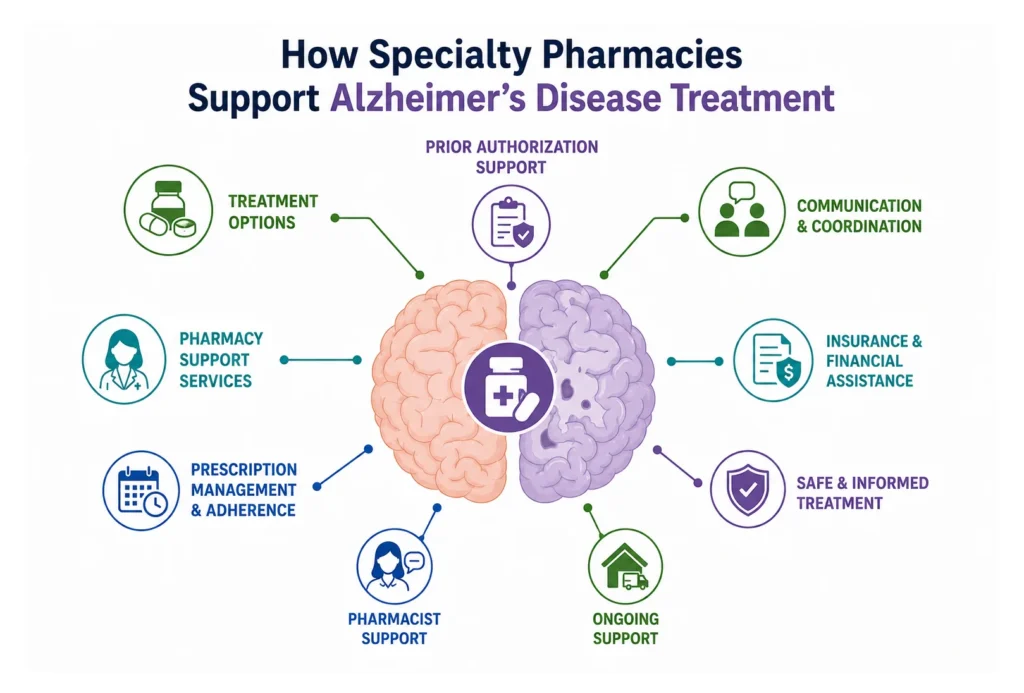
A specialty pharmacy can support the prescription side of treatment by helping with:
- Prescription coordination
- Insurance verification
- Prior authorization
- Refills and prescription management
- Medication delivery
- Adherence support
- Pharmacist consultations
- Patient assistance programs
- Communication with healthcare providers
How Do Alzheimer’s Prescriptions Work?
Alzheimer’s prescriptions do not all work in the same way. Some are designed to manage cognitive symptoms, while newer disease-modifying treatments target biological processes associated with the disease. If you are searching for a specialty pharmacy near me, understanding these differences can help patients and caregivers know where pharmacy support may fit into the treatment process.
Cholinesterase Inhibitors
Cholinesterase inhibitors include:
- Donepezil
- Rivastigmine
- Galantamine
- Benzgalantamine
A pharmacist can help patients and caregivers understand how a prescription should be taken, what side effects to watch for, and when refills may be needed. The Alzheimer’s Association identifies these drugs among current treatments for cognitive symptoms of Alzheimer’s disease.
Memantine
Memantine is another FDA-approved treatment generally used for moderate-to-severe Alzheimer’s disease. It works differently from cholinesterase inhibitors and may be prescribed alone or alongside another Alzheimer’s treatment.
Pharmacy support can help patients and caregivers maintain the prescribed schedule, coordinate refills, and discuss questions or potential medication concerns with a pharmacist.
Can a Specialty Pharmacy Help With Alzheimer’s Prescriptions?
Yes. A specialty pharmacy can help patients and caregivers manage the prescription and insurance-related aspects of Alzheimer’s treatment.
This support can be particularly useful when a prescription requires prior authorization, additional clinical information, financial assistance, or ongoing refill coordination.
The pharmacy may communicate with the prescribing team, help identify insurance requirements, and keep the prescription moving through the appropriate steps. SwyftScripts works with clinical teams to help expedite prior authorizations and ensure insurers receive requested information.
For caregivers, having a consistent pharmacy contact can also make it easier to manage prescription questions and treatment-related pharmacy needs.
Read Related: Why Medication Adherence Matters for Specialty Medications
How Does a Specialty Pharmacy Support Alzheimer’s Treatment?
There is no single pharmacy service that every Alzheimer’s patient needs. Support depends on the patient’s prescription, insurance plan, treatment stage, and individual circumstances.
A specialty pharmacy may assist with:
- Prescription intake and coordination
- Insurance verification
- Prior authorization
- Financial assistance
- Refill coordination
- Medication adherence
- Pharmacist counseling
- Prescription delivery
- Communication with prescribers
SwyftScripts specifically provides services including prior authorizations, medication assistance programs, patient assistance programs, medication reminders, medication reconciliation, consultations, and home delivery.
How Does Prior Authorization Affect Alzheimer’s Treatment?
Some Alzheimer’s prescriptions may require prior authorization before an insurance plan will provide coverage.
Prior authorization is an insurance review that determines whether a prescribed treatment meets the health plan’s coverage requirements.
The process may require information about:
- The patient’s diagnosis
- Disease stage
- Clinical findings
- Previous treatment
- Prescribed therapy
- Treatment rationale
- Other documentation requested by the insurer
How Can Pharmacists Help With Alzheimer’s Medication Management?
Medication management can become increasingly important when a patient takes multiple prescriptions.
A pharmacist can help patients and caregivers understand:
- What each prescription is used for
- When each prescription should be taken
- How to follow the prescribed schedule
- Potential medication interactions
- Possible side effects
- Refill timing
- Storage requirements
- Questions to discuss with the healthcare provider
Pharmacists can also review a patient’s medication profile and identify potential medication-related concerns that should be discussed with the healthcare team. For older adults taking multiple prescriptions, medication reconciliation and pharmacist consultations can help keep the treatment plan organized. SwyftScripts lists medication reconciliation, medication therapy management, comprehensive medication reviews, and pharmacist consultations among its pharmacy services.
Why Is Medication Adherence Important in Alzheimer’s Care?
Following a prescribed treatment schedule is an important part of medication management. However, memory problems associated with Alzheimer’s disease can make it difficult for some patients to remember doses or manage refills independently.
Depending on the patient’s needs, pharmacy support may include:
- Refill reminders
- Medication reminders
- Organized prescription schedules
- Caregiver involvement
- Pharmacist counseling
- Prescription delivery
- Medication packaging options
Can Alzheimer’s Symptoms Be Managed With Other Prescriptions?
Treatment depends on the specific symptom and its underlying cause. Non-drug approaches may be considered before adding another prescription, and any medication should be selected with attention to potential risks, interactions, and side effects. From a pharmacy perspective, reviewing the patient’s complete prescription list can help identify potential interactions or medication-related concerns that should be discussed with the healthcare provider.
Are There Supplements That Can Cure Alzheimer’s Disease?
No supplement has been proven to cure Alzheimer’s disease.
Patients and caregivers may encounter products marketed as memory boosters or natural treatments for Alzheimer’s. Such claims should be approached carefully, particularly when a product is promoted as an alternative to an established treatment plan.
Supplements can also interact with prescription drugs or create additional safety concerns. Patients should discuss supplements with their healthcare provider or pharmacist before adding them to an Alzheimer’s treatment plan. A pharmacist can review prescription and nonprescription products together and help identify potential concerns that should be discussed with the patient’s healthcare team.
What Should You Ask a Pharmacy About Alzheimer’s Treatment?
Patients and caregivers may benefit from asking questions such as:
- What is this prescription used for?
- How should it be taken or administered?
- When should the next refill be requested?
- Does this prescription require prior authorization?
- Has insurance approved the treatment?
- Are financial assistance programs available?
- Are there potential drug interactions?
- What side effects should be reported?
- Does the prescription require special storage?
- Can the pharmacy provide home delivery?
- Can a caregiver receive prescription updates?
These questions can help patients and caregivers understand the pharmacy-related steps involved in managing Alzheimer’s treatment.
How SwyftScripts Can Support Alzheimer’s Prescription Care
Alzheimer’s treatment can involve patients, caregivers, healthcare providers, insurance companies, and pharmacies. Coordinating these different parts of care can become challenging, particularly when prescriptions require authorization, refills, financial assistance, or ongoing monitoring.
SwyftScripts provides specialty pharmacy services designed to simplify prescription access and ongoing management. Its services include insurance and prior authorization support, financial assistance, medication reminders, pharmacist consultations, refill coordination, and home delivery. SwyftScripts also provides patients with access to pharmacist support and prescription management tools, helping make specialty pharmacy care more convenient from home.
Frequently Asked Questions
What is the role of a specialty pharmacy in Alzheimer’s treatment?
A specialty pharmacy can support the prescription side of Alzheimer’s care through insurance coordination, prior authorization, refills, pharmacist counseling, adherence support, financial assistance, and delivery.
Can a specialty pharmacy help with Alzheimer’s prescriptions?
Yes. Specialty pharmacies can help coordinate prescriptions and insurance requirements while providing services such as refill management, pharmacist support, and prescription delivery.
What prescriptions are used for Alzheimer’s disease?
FDA-approved treatments include cholinesterase inhibitors, memantine, and disease-modifying therapies such as lecanemab and donanemab for appropriate patients. Treatment selection depends on disease stage and individual medical circumstances.
How can pharmacists help Alzheimer’s patients?
Pharmacists can provide medication counseling, review prescriptions for potential interactions, support adherence, coordinate refills, answer treatment questions, and communicate medication-related concerns to the healthcare team.