

Vasculitis is a group of rare conditions that causes inflammation of the blood vessels. When blood vessels become inflamed, they can narrow, weaken, or become blocked, reducing blood flow to different parts of the body. Since blood vessels supply oxygen and nutrients to every organ, vasculitis can affect multiple body systems and lead to serious health complications if left untreated.
Proper treatment is essential because ongoing inflammation can damage the kidneys, lungs, heart, nerves, and other organs. The goal of vasculitis treatment is to reduce inflammation, control symptoms, prevent complications, and achieve long-term remission. For patients taking specialty medications, a specialty pharmacy can help with medication access, insurance support, refill coordination, and ongoing treatment management. Patients looking for reliable medication support can connect with a trusted specialty pharmacy near me to receive personalized assistance throughout their treatment journey.
What Is Vasculitis?
Vasculitis is an autoimmune condition that causes inflammation of the blood vessels. It can affect arteries, veins, or small capillaries, depending on the type of vasculitis a person has. Inflammation changes the structure of the blood vessel walls. They may become thicker, narrower, or weaker, making it difficult for blood to circulate normally. In severe cases, blood flow may be reduced or completely blocked, preventing tissues and organs from receiving enough oxygen and nutrients.
How Is Vasculitis Treated?
There is no single treatment that works for every type of vasculitis. Instead, doctors develop an individualized treatment plan based on the type of vasculitis, the organs involved, the severity of symptoms, and the patient’s overall health. Treatment usually focuses on two stages. The first is controlling active inflammation to prevent further damage. The second is maintaining remission and reducing the risk of future flare-ups.
Early treatment plays an important role in protecting organs from permanent damage. Regular follow-up appointments also allow healthcare providers to monitor progress, adjust medications when needed, and manage any treatment-related side effects.
Medications for Vasculitis
The right medication for vasculitis depends on the type of vasculitis, the organs involved, and the severity of the disease. Treatment aims to reduce inflammation, protect blood vessels from further damage, relieve symptoms, and prevent future flare-ups. Some people only need short-term treatment, while others require long-term medications to maintain remission and keep the condition under control.
Corticosteroids
Corticosteroids, such as prednisone, are often the first medications prescribed because they work quickly to reduce inflammation. They help relieve symptoms and prevent further damage to affected blood vessels during active disease. As symptoms improve, the dose is gradually reduced to lower the risk of long-term side effects.
Immunosuppressive Medications
Immunosuppressive medications help calm an overactive immune system that attacks healthy blood vessels. Common medications include methotrexate, azathioprine, mycophenolate mofetil, and cyclophosphamide for more severe cases. Regular blood tests and follow-up appointments help monitor the medication’s effectiveness and safety.
Specialty Medications for Vasculitis
Specialty medications are used to treat certain types of vasculitis when the disease is severe, relapsing, or does not respond well to standard therapies. Depending on the condition, treatment may include medications such as rituximab, tocilizumab, avacopan, or mepolizumab. Because these therapies often require specialized handling, monitoring, or prior authorization, they are commonly dispensed through specialty pharmacies that provide ongoing patient support.
Supportive Medications
Supportive medications help manage symptoms, reduce treatment-related side effects, and protect overall health during vasculitis treatment. These may include blood pressure medications, calcium and vitamin D supplements, stomach-protective medicines, or antibiotics to help prevent certain infections. Your healthcare provider will recommend supportive treatments based on your individual health needs and treatment plan.
Common Vasculitis Symptoms
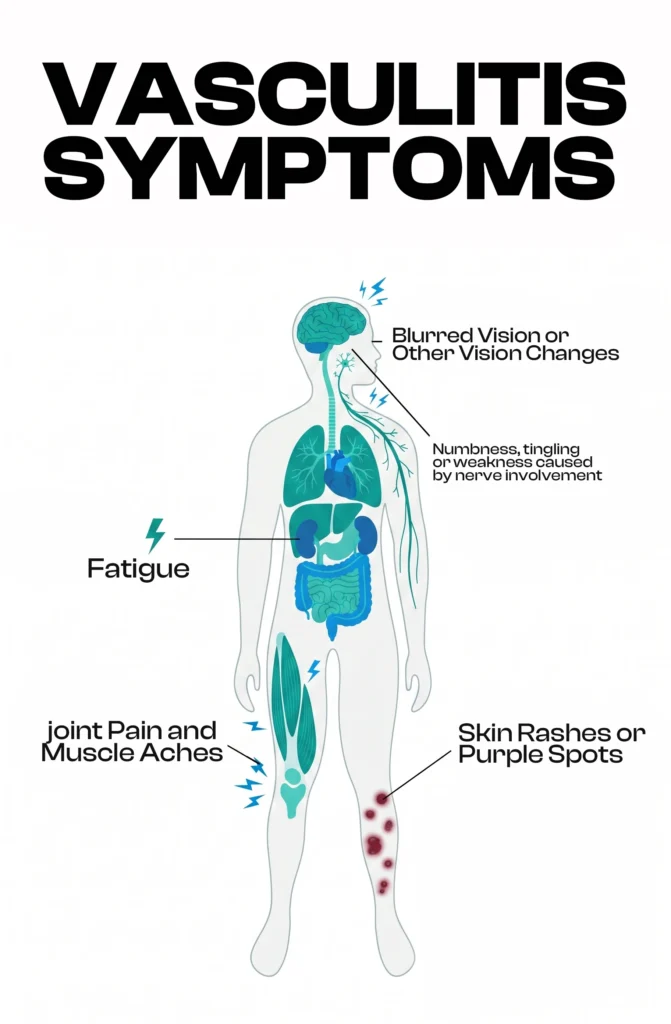
Vasculitis symptoms vary depending on the blood vessels and organs affected. Some people develop general symptoms, while others experience problems related to a specific part of the body. Common symptoms include:
- Fatigue
- Fever
- Skin rashes or purple spots
- Joint pain and muscle aches
- Numbness, tingling, or weakness caused by nerve involvement
- Blurred vision or other vision changes
Some patients may also experience weight loss, abdominal pain, coughing, shortness of breath, or kidney problems. Because these symptoms can resemble other medical conditions, it is important to seek medical evaluation if they persist or worsen.
Causes and Risk Factors of Vasculitis
The exact cause of vasculitis is not always known. However, researchers believe that it often develops when the immune system mistakenly attacks healthy blood vessels. Several factors may increase the risk of developing vasculitis, including:
- Autoimmune reactions
- Viral or bacterial infections
- Certain medications
- Genetic factors
- Environmental triggers
In many cases, more than one factor may contribute to the development of the disease.
Types of Vasculitis
There are several forms of vasculitis, and each affects different blood vessels and organs. The condition is classified based on the size of the blood vessels involved and the areas of the body it affects. Some types are mild and limited to one organ, while others can be severe and involve multiple organ systems.
- Giant Cell Arteritis primarily affects large arteries in the head and neck. It often causes headaches, jaw pain, scalp tenderness, and vision problems.
- Granulomatosis with Polyangiitis commonly affects the sinuses, lungs, and kidneys. Symptoms may include chronic sinus infections, coughing, breathing difficulties, and kidney inflammation.
- Microscopic Polyangiitis mainly affects small blood vessels, especially those in the kidneys and lungs. Early diagnosis and treatment are important to prevent permanent organ damage.
- Takayasu Arteritis affects the aorta and its major branches. Patients may experience fatigue, dizziness, arm pain, high blood pressure, or reduced blood flow to different parts of the body.
Although these conditions share the common feature of blood vessel inflammation, each type requires a personalized treatment approach based on the organs involved and the severity of the disease.
How Doctors Diagnose Vasculitis
Diagnosing vasculitis can be challenging because its symptoms often resemble those of other autoimmune and inflammatory conditions. Doctors diagnose the condition by reviewing your medical history, performing a physical examination, and using tests to confirm inflammation and identify the organs affected. Early diagnosis is important because it allows treatment to begin before serious organ damage occurs. Several tests may be used to diagnose vasculitis, including:
- Blood tests: Measure inflammation, evaluate kidney and liver function, and detect antibodies linked to certain types of vasculitis.
- Imaging scans: Ultrasound, CT scans, MRI, or angiography help identify inflamed or narrowed blood vessels.
- Biopsy: A small sample of affected tissue may be examined under a microscope to confirm inflammation in the blood vessel walls.
An accurate diagnosis is essential because treatment varies depending on the type of vasculitis and the organs involved. Early diagnosis allows treatment to begin before significant organ damage occurs.
How Long Does Vasculitis Treatment Take?
The length of vasculitis treatment depends on the type and severity of the disease, the organs affected, and how well it responds to treatment. Some people need treatment for only a few months, while others require long-term therapy to maintain remission and prevent flare-ups. Patients taking specialty medications may benefit from a specialty pharmacy, which provides medication coordination, refill support, and ongoing guidance to help them stay on track with treatment. Even if symptoms improve, it is important to continue treatment as directed by your healthcare provider.
Specialty Pharmacy Support for Vasculitis Treatment
Some vasculitis treatments, including biologics and advanced immunosuppressants, require special handling, ongoing monitoring, prior authorizations, and insurance coordination. A specialty pharmacy helps simplify this process by working closely with patients, healthcare providers, and insurance companies to minimize treatment delays and improve medication adherence. Specialty pharmacy services may include:
- Medication access and insurance support to help patients navigate insurance coverage, financial assistance programs, and specialty medication approvals.
- Prior authorization assistance by coordinating with healthcare providers and insurance companies to reduce delays in starting treatment.
- Prescription coordination to ensure specialty medications are processed accurately and delivered on time through a reliable prescription delivery service.
- Refill reminders that help patients avoid missed doses and maintain a consistent treatment schedule.
- Patient education on proper medication use, storage requirements, possible side effects, and what to expect during treatment.
- Ongoing medication adherence support through regular follow-ups, pharmacist guidance, and personalized care to help patients stay on track with long-term therapy.
Get Support for Your Vasculitis Treatment
Managing vasculitis often requires long-term treatment and consistent medication use. If your care includes specialty medications, we can help simplify the process with prescription coordination, insurance support, refill management, home delivery, and pharmacist guidance. Contact SwyftScripts today to learn how our specialty pharmacy services can help you stay on track with your treatment.