

Dermatomyositis is a rare inflammatory condition that affects both the muscles and skin. It occurs when the immune system causes inflammation in muscle tissue, leading to weakness, while also creating characteristic skin changes such as rashes and irritation.
Early diagnosis and proper treatment are essential to reduce inflammation, improve muscle strength, and prevent complications. Treatment may include medications, physical therapy, lifestyle changes, and regular monitoring. For patients prescribed specialty medications, a trusted specialty pharmacy near me can help with medication access, insurance support, and ongoing treatment management.
What Is Dermatomyositis?
Dermatomyositis is an autoimmune inflammatory disease that primarily affects the muscles and skin. In people with this condition, the immune system mistakenly attacks healthy tissues, causing inflammation that damages muscle fibers and leads to weakness. One of the main features of dermatomyositis is the combination of muscle inflammation and skin symptoms. Patients may develop a reddish-purple rash, often around the eyes, face, knuckles, elbows, knees, or other areas exposed to sunlight.
Dermatomyositis Treatment
The main goals of dermatomyositis treatment are to reduce inflammation, improve muscle strength, control skin symptoms, and prevent disease progression. Treatment plans are personalized based on symptom severity, affected organs, and how well a patient responds to therapy. Many people require a combination of medications, rehabilitation, and lifestyle adjustments. Regular follow-up appointments allow doctors to update treatment plans as symptoms change.
Medications for Dermatomyositis
Medications help reduce inflammation, control immune activity, and prevent muscle damage. Patients using specialty medications may benefit from pharmacy support for medication access, insurance coordination, and treatment management. Since dermatomyositis treatments often require long-term use, a reliable prescription delivery service can help ensure medications are received on time and treatment stays consistent.
Corticosteroids
Corticosteroids, such as prednisone, are often the first treatment for dermatomyositis. They work quickly to reduce inflammation and improve muscle weakness. Because long-term use may cause side effects, the dose is usually reduced as symptoms improve.
Immunosuppressants
Immunosuppressants help control the overactive immune system and are commonly used when corticosteroids alone are not enough. Medications such as methotrexate, azathioprine, and mycophenolate mofetil can help manage muscle and skin inflammation. Regular monitoring is important to ensure these treatments remain safe and effective.
Intravenous Immunoglobulin (IVIG)
IVIG is a specialty medication that may be recommended for people with severe or treatment-resistant dermatomyositis. It helps regulate the immune system and can improve muscle strength, swallowing difficulties, and skin symptoms. IVIG is administered by infusion and requires ongoing monitoring during treatment.
Biologic Treatments
Biologic therapies, such as rituximab, may be used for patients who do not respond to conventional treatments. These targeted medications help control immune-related inflammation and are often managed through specialty pharmacies. Specialty pharmacy services can assist with prior authorizations, refill coordination, and patient education throughout treatment.
Dermatomyositis Symptoms
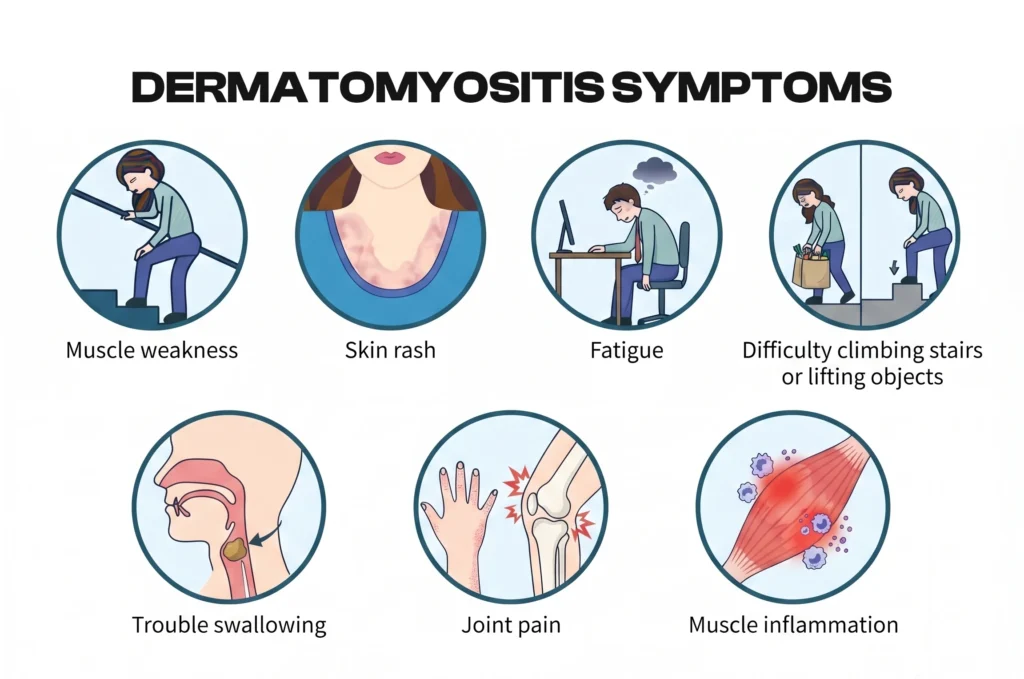
Symptoms of dermatomyositis can develop gradually or appear suddenly. The severity of symptoms varies from person to person, with some individuals experiencing mild weakness while others develop significant muscle and skin problems. Common symptoms include:
- Muscle weakness: Often affects muscles near the center of the body, including the hips, thighs, shoulders, and upper arms.
- Skin rash: A red or purple rash may appear on the face, eyelids, hands, elbows, knees, or other areas.
- Fatigue: Persistent tiredness may occur due to inflammation and reduced muscle function.
- Difficulty climbing stairs or lifting objects: Muscle weakness can make daily activities more challenging.
- Trouble swallowing: Inflammation may affect muscles involved in swallowing.
- Joint pain: Some patients experience joint discomfort or stiffness.
- Muscle inflammation: Swelling and irritation in muscle tissue can contribute to weakness and reduced mobility.
Recognizing symptoms early can help doctors begin treatment before significant muscle damage occurs.
Causes of Dermatomyositis
The exact cause of dermatomyositis is not completely understood. Researchers believe it develops due to a combination of immune system changes, genetic factors, and environmental triggers. Dermatomyositis is considered an autoimmune condition because the immune system mistakenly attacks healthy muscle and skin tissues. This abnormal immune response causes inflammation and affects normal muscle function. Possible factors linked to dermatomyositis include:
- Autoimmune reactions: The immune system becomes overactive and attacks healthy tissues.
- Genetic factors: Certain inherited traits may increase the risk of autoimmune conditions.
- Environmental triggers: Infections, medications, or other environmental factors may contribute to disease development.
- Other health conditions: Dermatomyositis may occur alongside other medical conditions that require careful evaluation.
Because multiple factors may contribute to the condition, treatment focuses on controlling immune activity and reducing inflammation.
Dermatomyositis Diagnosis
Diagnosing dermatomyositis involves identifying muscle inflammation, skin involvement, and immune system activity. Since symptoms may overlap with other inflammatory muscle disorders, doctors use different tests to confirm the diagnosis. A healthcare provider may review symptoms, perform a physical examination, assess muscle strength, and order additional testing to understand the severity of inflammation.
Blood Tests
Blood tests help identify signs of muscle damage and immune activity. Common blood tests include:
- Muscle enzyme tests: Elevated creatine kinase (CK) and other muscle enzymes may indicate muscle inflammation.
- Autoantibody testing: Helps identify antibodies linked to dermatomyositis and provides information about disease patterns.
- Inflammation markers: Tests such as C-reactive protein (CRP) may help evaluate ongoing inflammation.
These tests may also help monitor treatment response.
Muscle Tests
Doctors may perform additional tests to evaluate muscle function and identify affected areas. These tests may include:
- Electromyography (EMG): Measures electrical activity in muscles and identifies abnormal patterns.
- MRI scans: Provide detailed images of muscles and help detect inflammation or damage.
- Muscle biopsy: Examines a small sample of muscle tissue to confirm changes related to dermatomyositis.
Skin Biopsy
A skin biopsy may be performed when skin symptoms are present. During this procedure, a small sample of affected skin is examined under a microscope. Skin biopsy results can help confirm dermatomyositis and rule out other conditions that may cause similar rashes.
IVIG Treatment for Dermatomyositis
Intravenous immunoglobulin (IVIG) is an advanced treatment option used for certain patients with dermatomyositis. IVIG contains antibodies collected from healthy donors that help regulate immune system activity and reduce abnormal immune responses.
Doctors may recommend IVIG for patients with severe muscle weakness, swallowing difficulties, significant skin symptoms, or those who have not responded well to other treatments. Because IVIG requires careful monitoring and specialist supervision, it is usually provided under the guidance of experienced healthcare professionals.
Dermatomyositis Skin Care
Skin symptoms require ongoing attention because rashes and sensitivity may continue even when muscle symptoms improve. Helpful skin care approaches include:
- Sun protection through sunscreen and protective clothing
- Regular use of gentle moisturizers
- Following prescribed treatments for rashes
- Consulting a dermatologist for persistent skin problems
Proper skin care can reduce irritation and help manage discomfort caused by dermatomyositis-related skin changes.
Living With Dermatomyositis
Living with dermatomyositis requires ongoing treatment and regular medical care to help control symptoms and prevent flare-ups. Following your treatment plan, staying active within your limits, and monitoring any changes can improve long-term health. Patients using specialty medications may also benefit from support provided by a specialty pharmacy. Key strategies include:
- Keeping regular follow-up appointments
- Taking medications as prescribed
- Monitoring new or worsening symptoms
- Following physical therapy recommendations
- Protecting the skin from sun exposure
- Using a specialty pharmacy for medication coordination and adherence support
Monitoring Dermatomyositis During Treatment
Regular monitoring helps healthcare providers evaluate treatment effectiveness and detect medication side effects early. Routine follow-up visits also allow treatment plans to be adjusted as symptoms change. Patients taking specialty medications often receive additional support through a specialty pharmacy to help manage ongoing therapy. Monitoring may include:
- Blood tests to monitor muscle enzymes and inflammation
- Routine laboratory tests for medication safety
- Physical exams to assess muscle strength
- Evaluation of skin symptoms
- Treatment adjustments based on disease activity
- Refill management and medication education from a specialty pharmacy
Specialty Pharmacy Support for Dermatomyositis
Managing dermatomyositis often involves specialty medications that require ongoing monitoring and coordinated care. SwyftScripts provides specialty pharmacy services that simplify treatment through prescription coordination, medication education, refill support, and adherence assistance. Contact us today to learn how personalized pharmacy support can help you stay on track with your treatment.